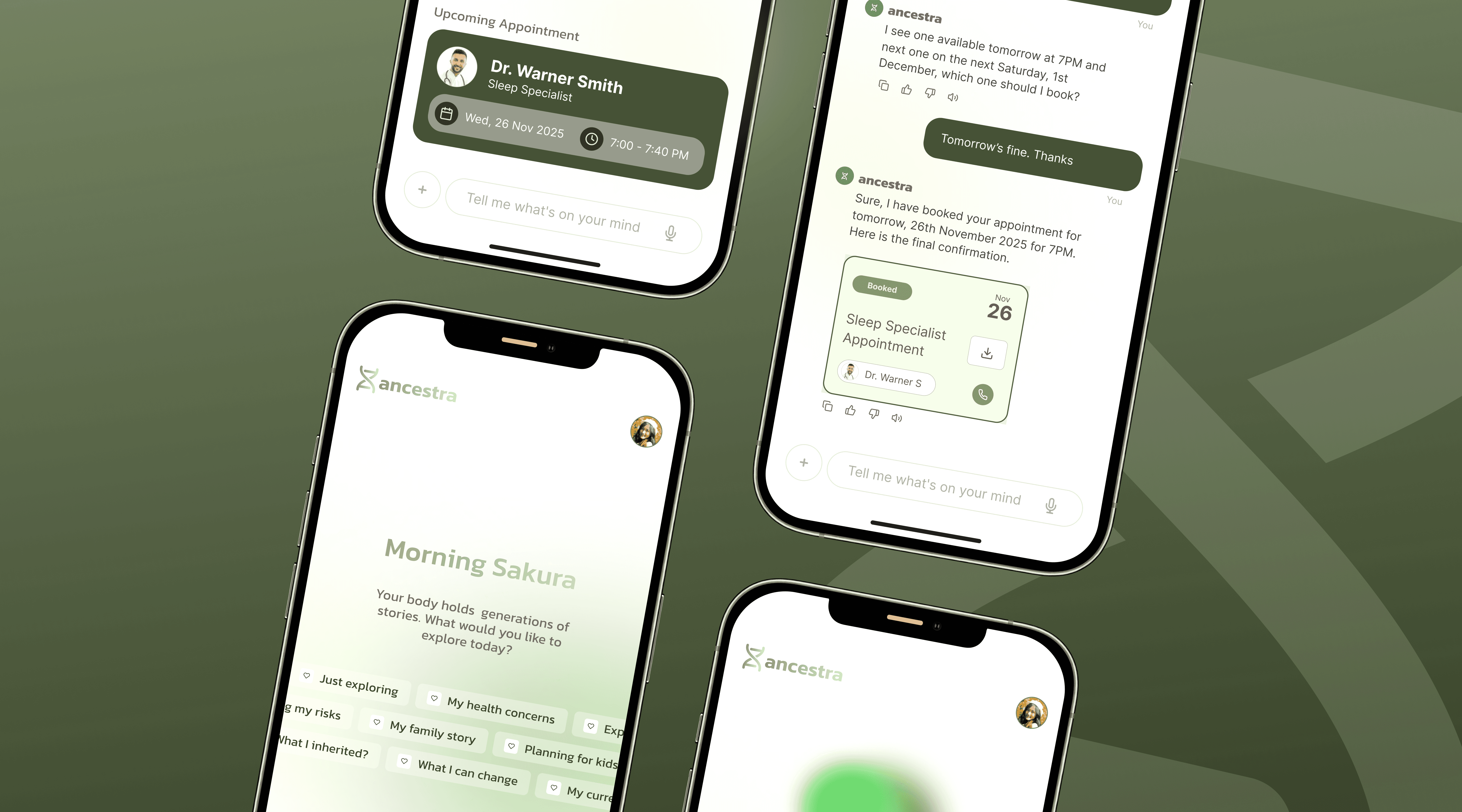
UX of AI design case study
Ancestra: An Empathetic AI Agent for Multigenerational Health
My Role
Conversational AI/UX Designer
Team
4-person design team
Timeline
5 Weeks
Overview
An empathetic AI health agent that provides personalized ancestral health insights through natural conversation. The agent proactively monitors patterns, adapts communication to individual needs, and integrates multimodal data (genetic, biometric, and historical) to deliver actionable wellness guidance.
THE PROBLEM
Modern medicine often overlooks the generational context; instead, it focuses on numbers and symptoms.
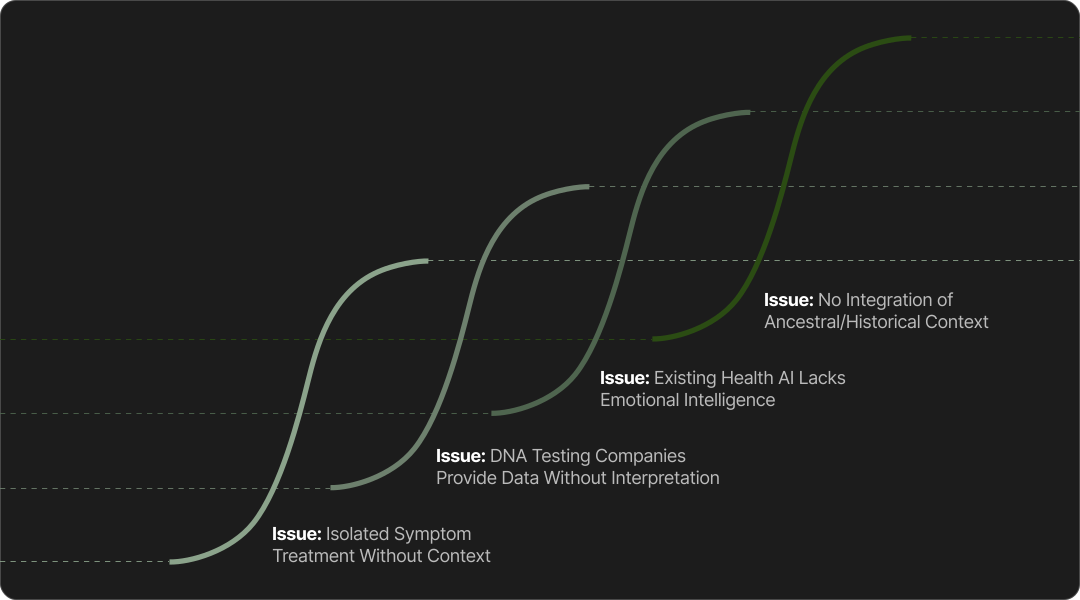
How Might we
Help users understand their current health patterns through the lens of lineage while keeping the focus on actionable present-day wellness?

Agent Design Process
How Ancestra.ai is built and how it helps users to understand their health
Agent Design Architecture
We designed Ancestra.ai as a multi-layered AI system that goes far beyond a chatbot; it's an agent that observes, learns, and acts on behalf of user wellbeing.
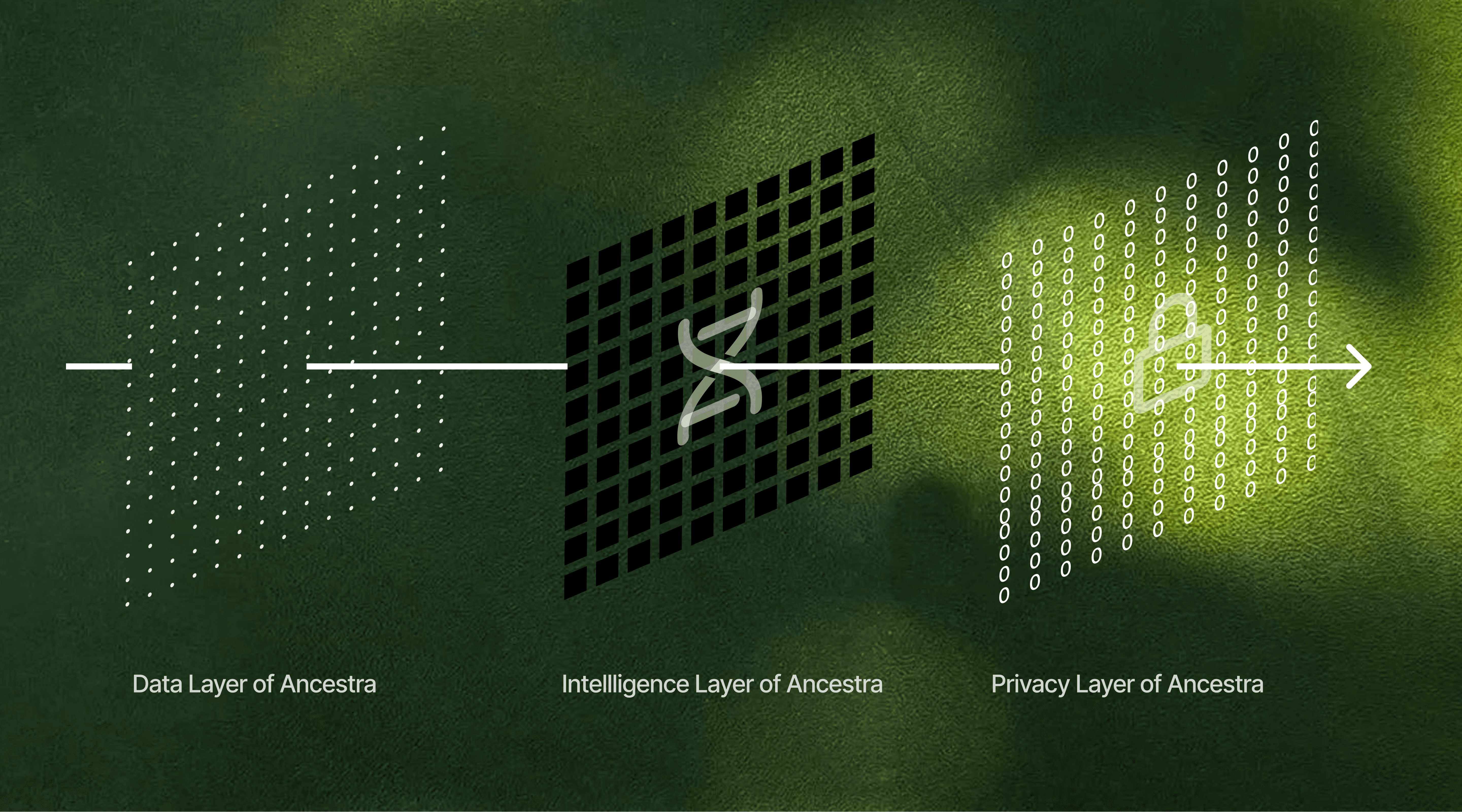
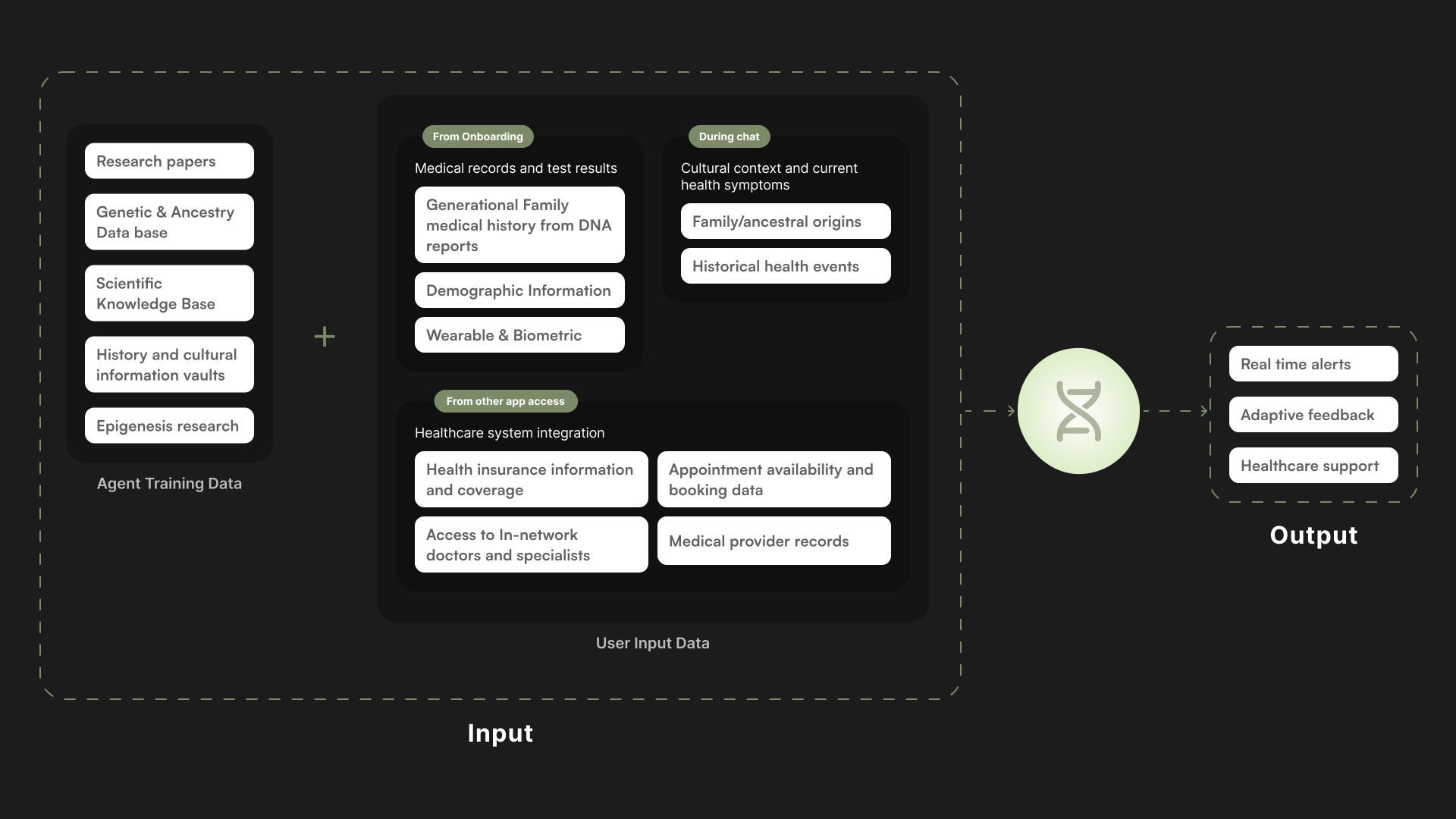
Data layer
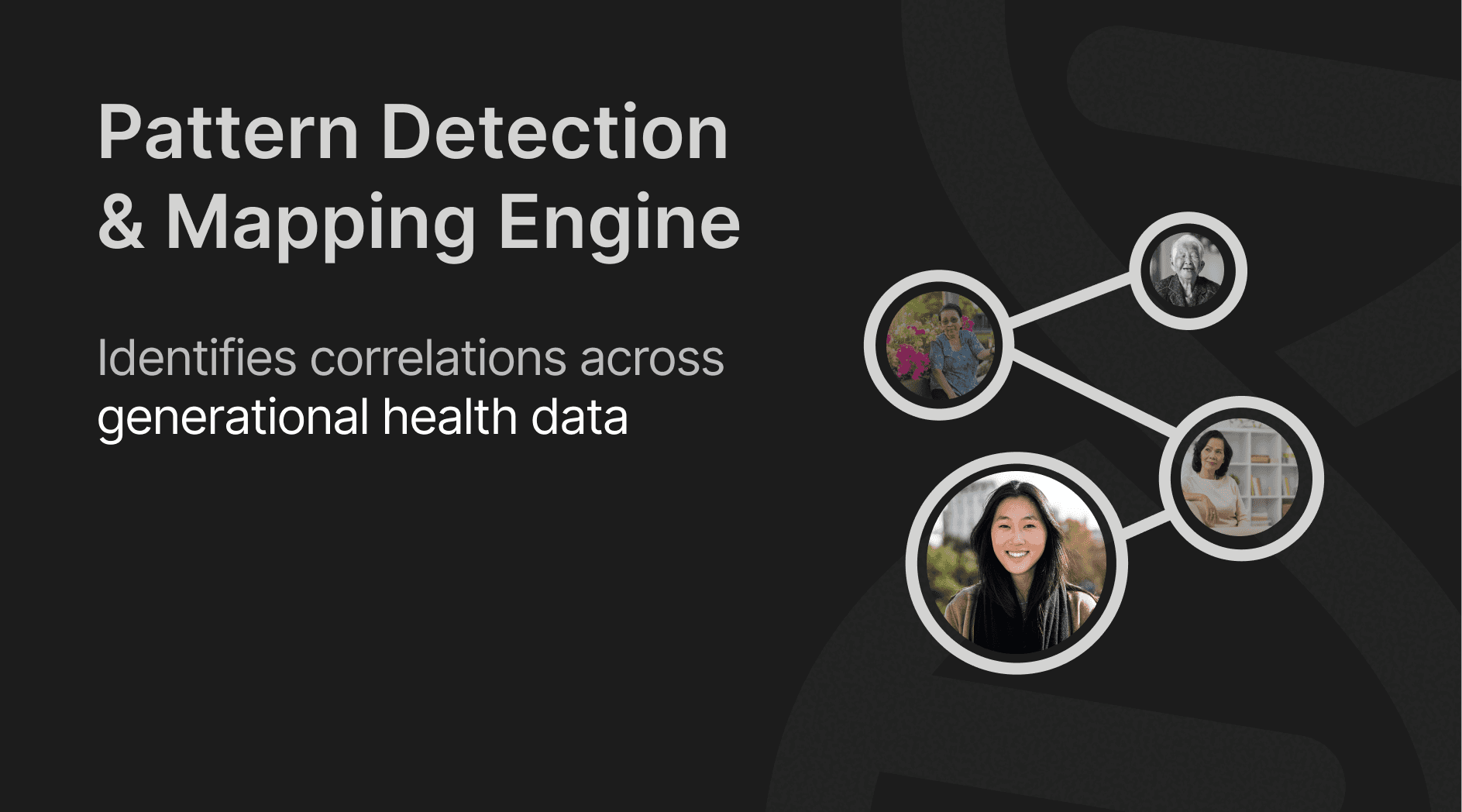
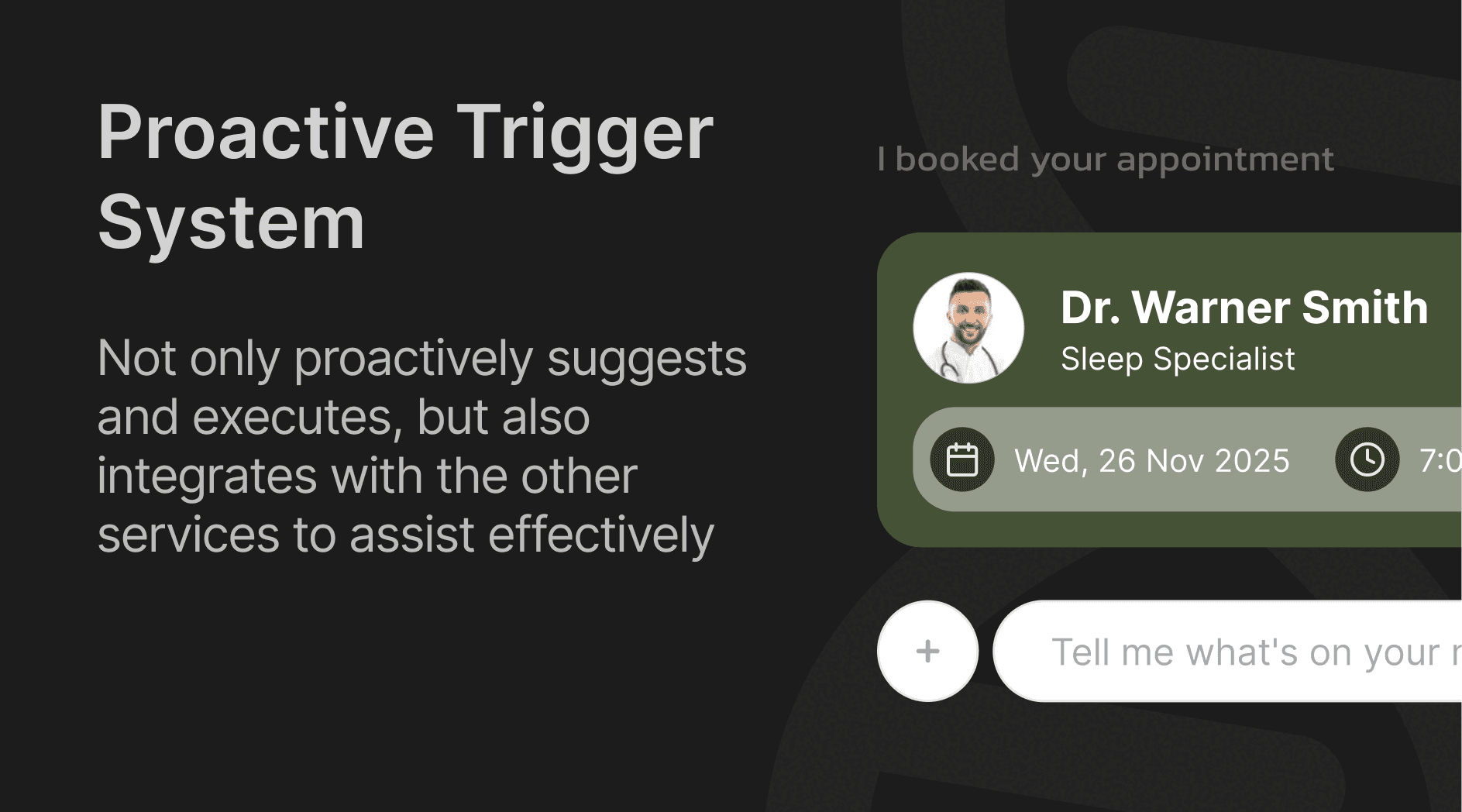
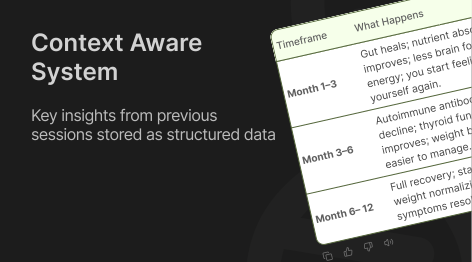
Customize Intelligence Layer
User data remains encrypted
Users can delete everything instantly (actual deletion, not just flags)
Zero third-party sharing without explicit per-instance consent
Data Privacy Layer
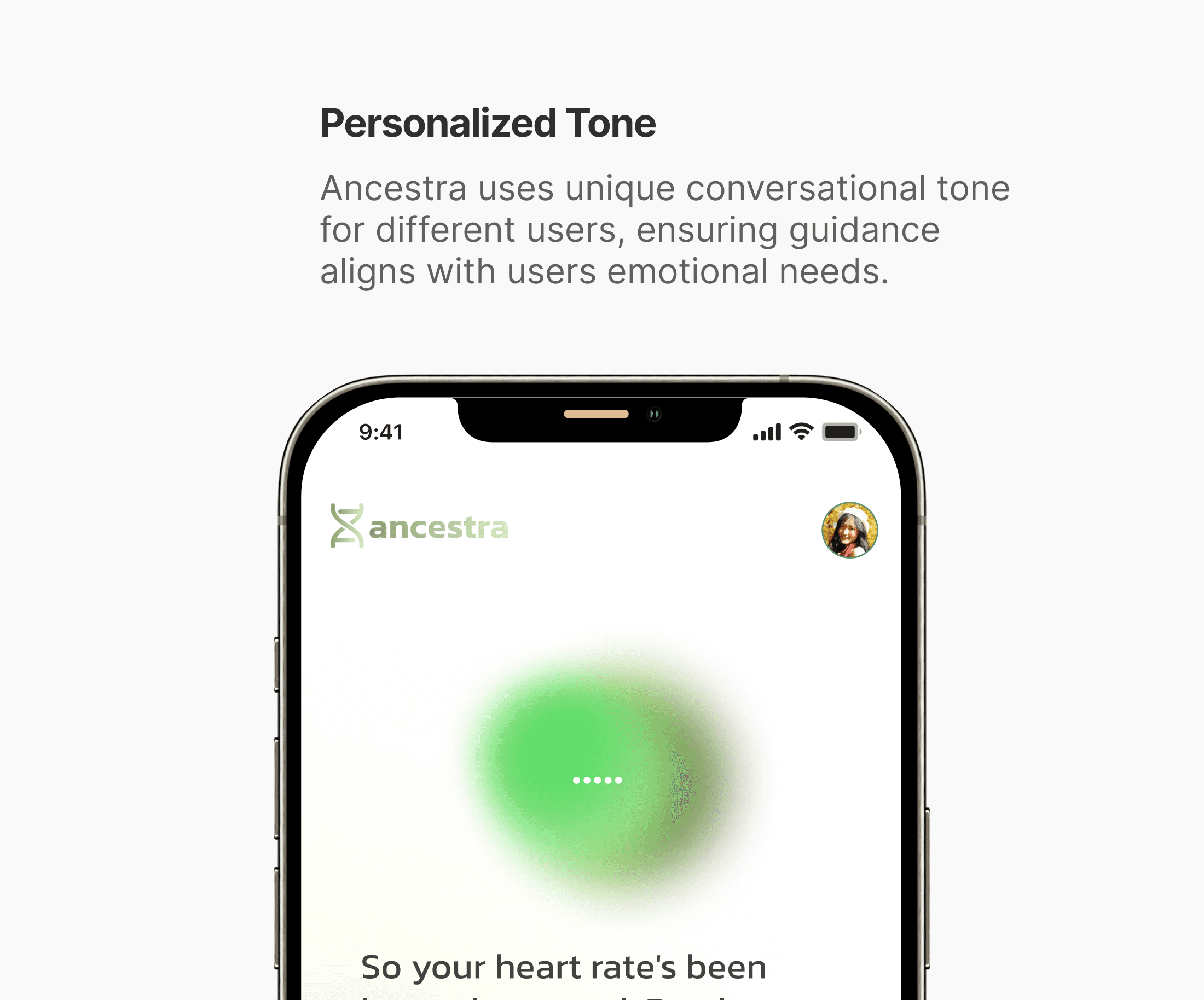
Ancestry.ai's Personality Traits and Tone of Voice
We designed Ancestra as a multi-layered AI system that goes far beyond a chatbot, it's an agent that observes, learns, and acts on behalf of user wellbeing.



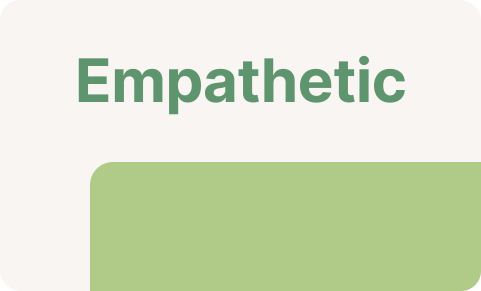












Traits Deliberately Avoided
Clinical detachment that feels robotic
Excessive optimism that dismisses real concerns
False certainty that overpromises what genetics can predict
Judgment about user choices or family history
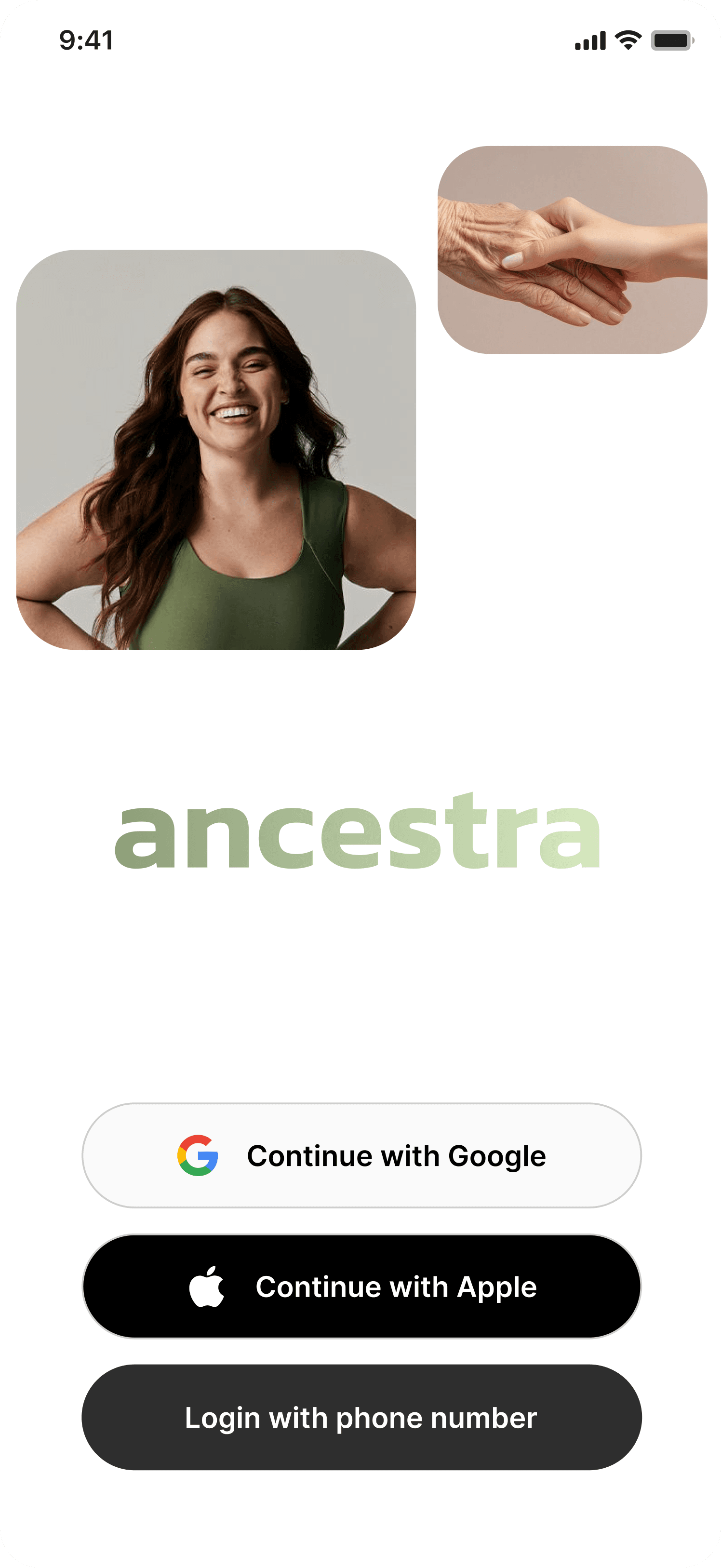
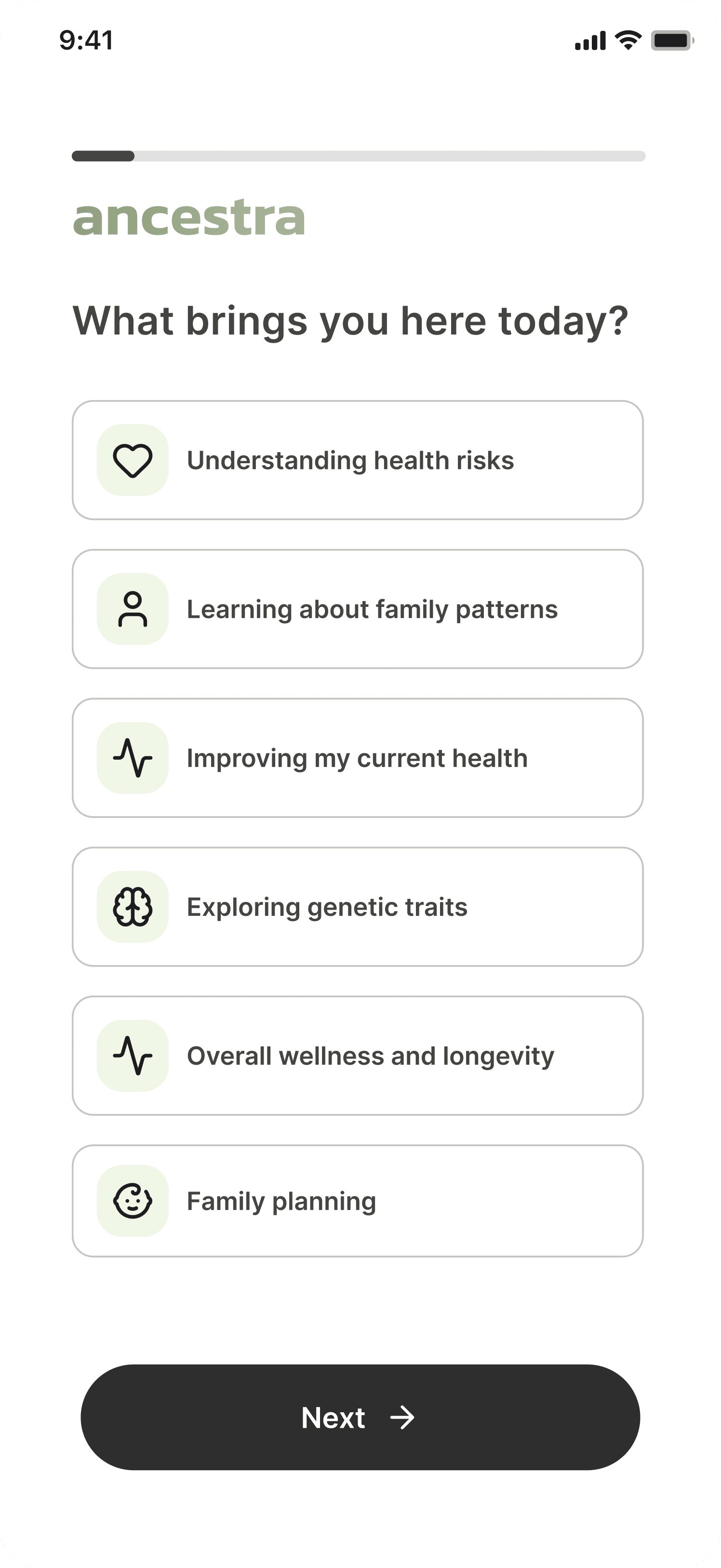
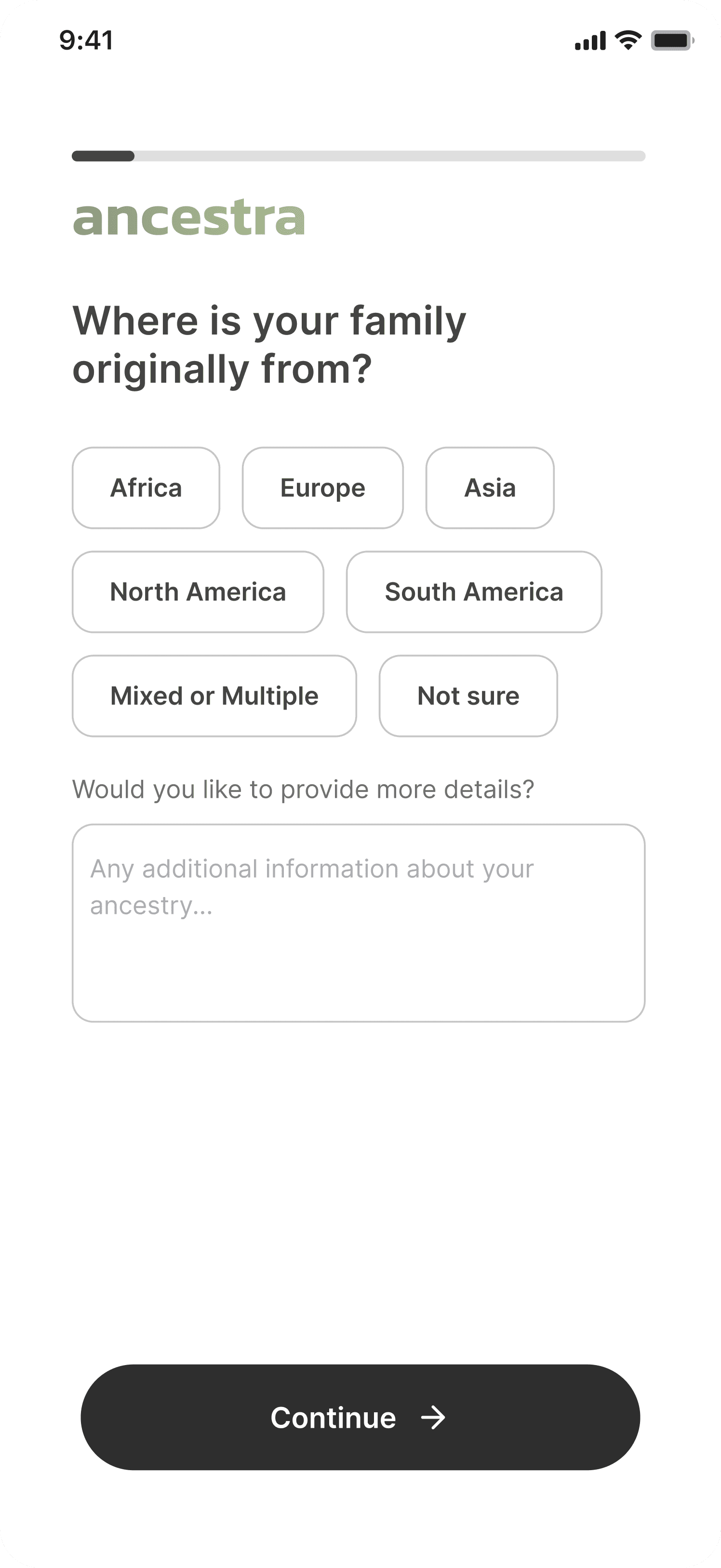
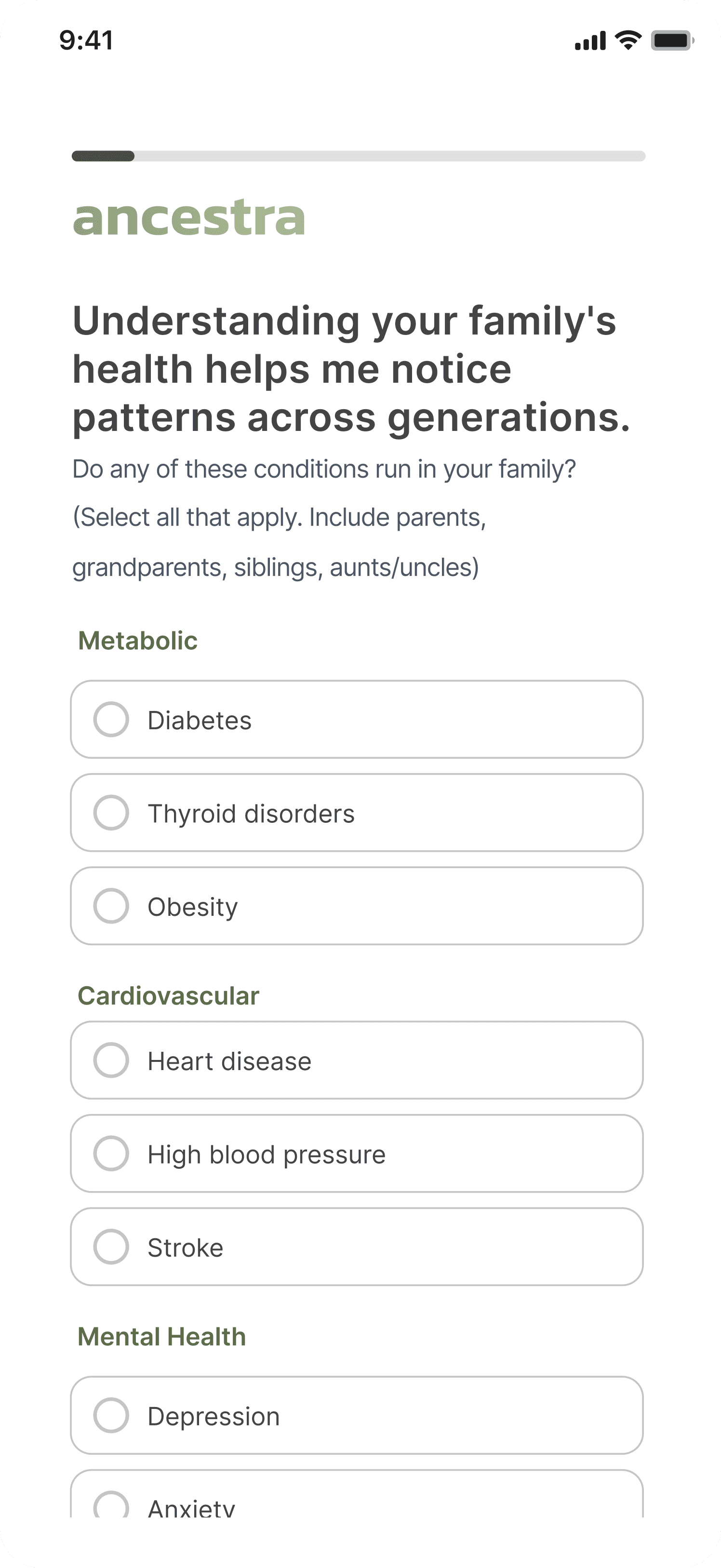
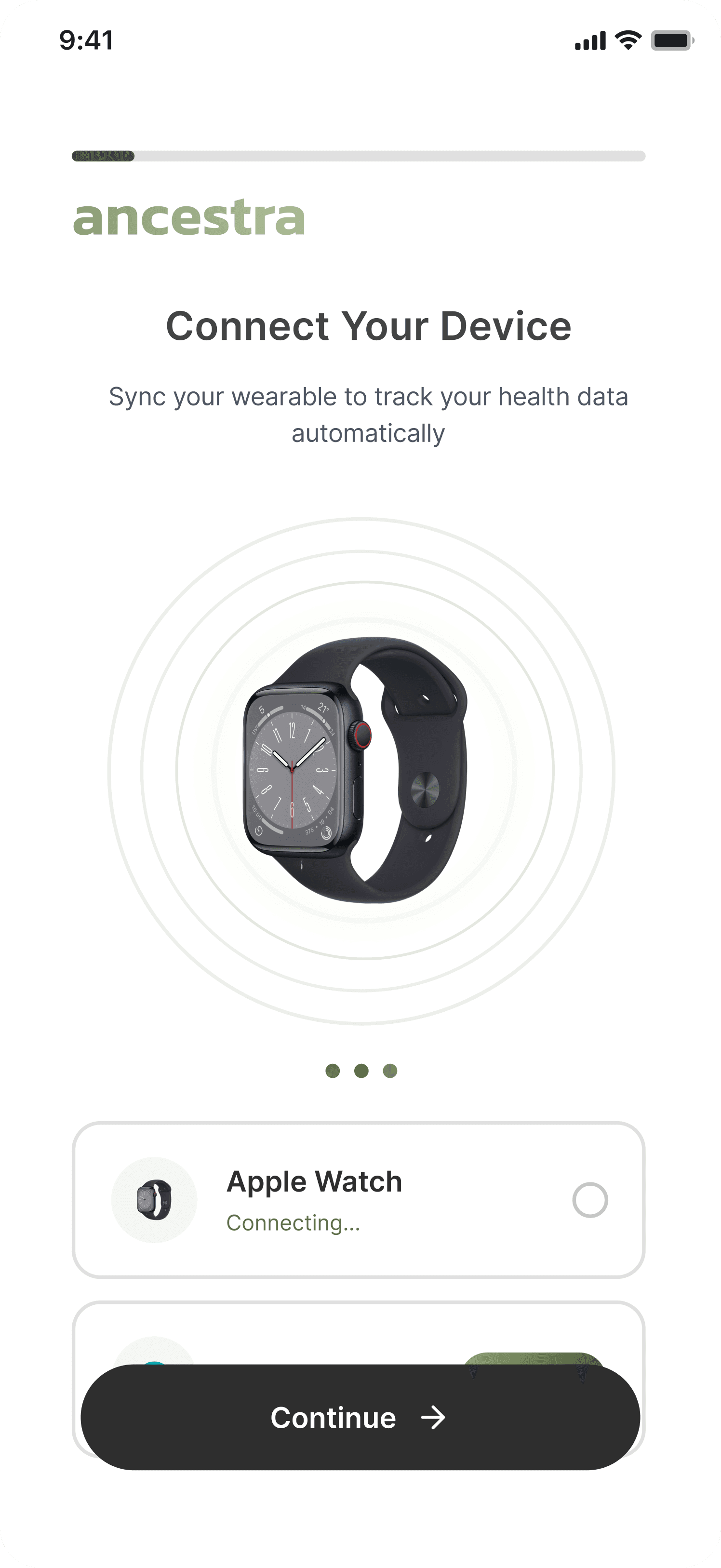
Guided Onboarding & Context Building
Ancestra.ai begins by gathering deep personal, family, and health context, from primary concerns to ancestral patterns and existing data. This ensures insights are built on a complete picture, not assumptions.

Intelligence Capabilities
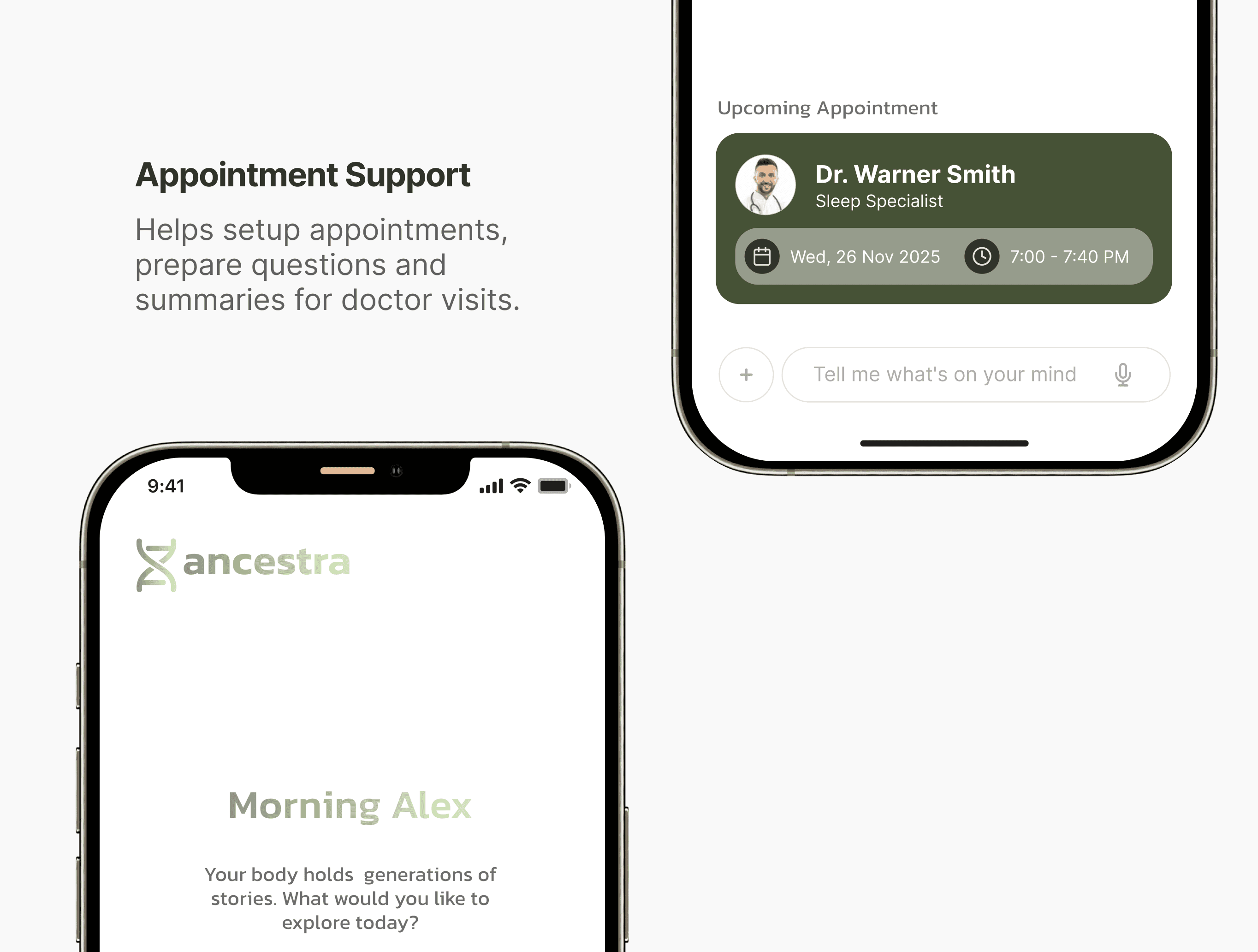
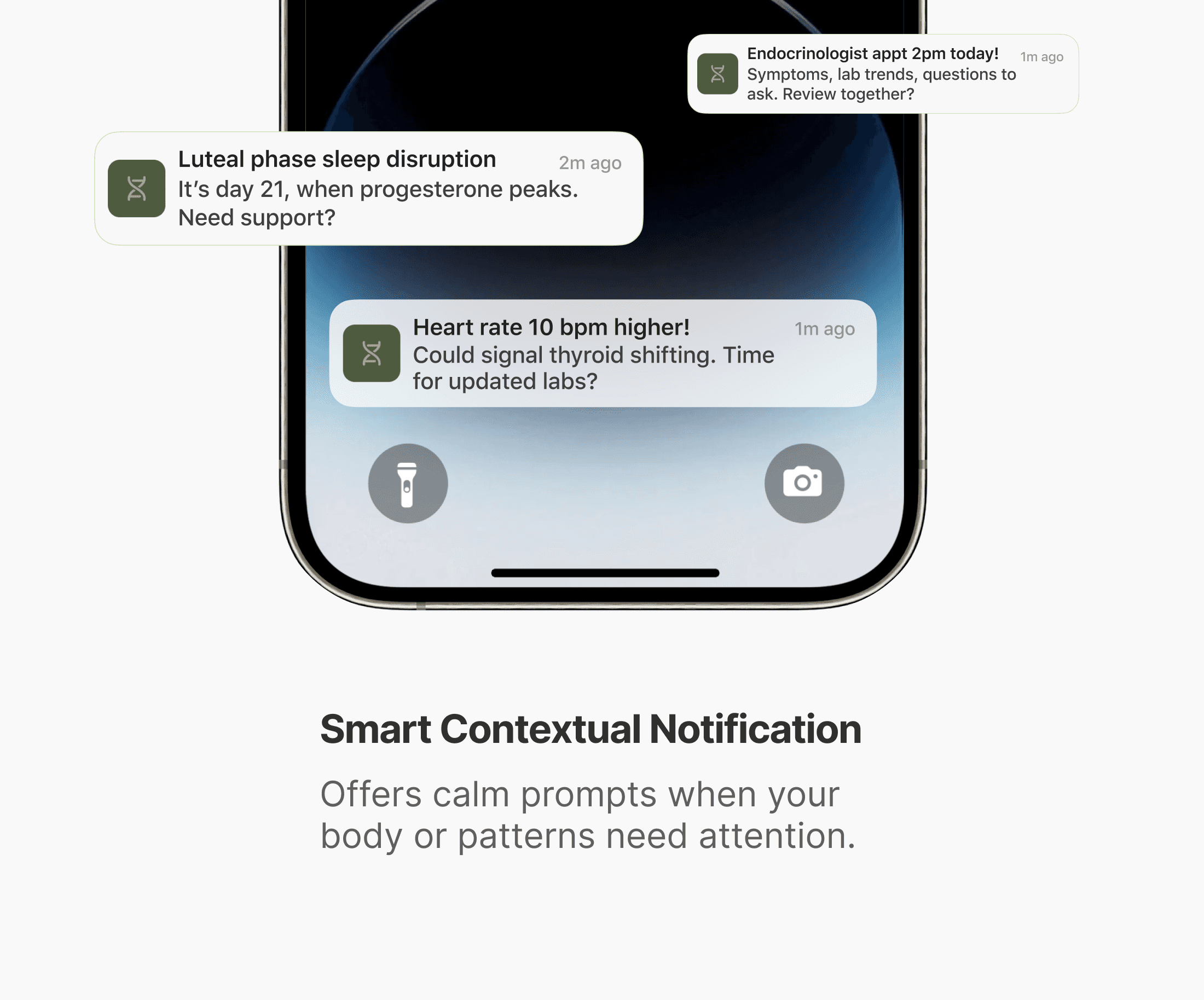
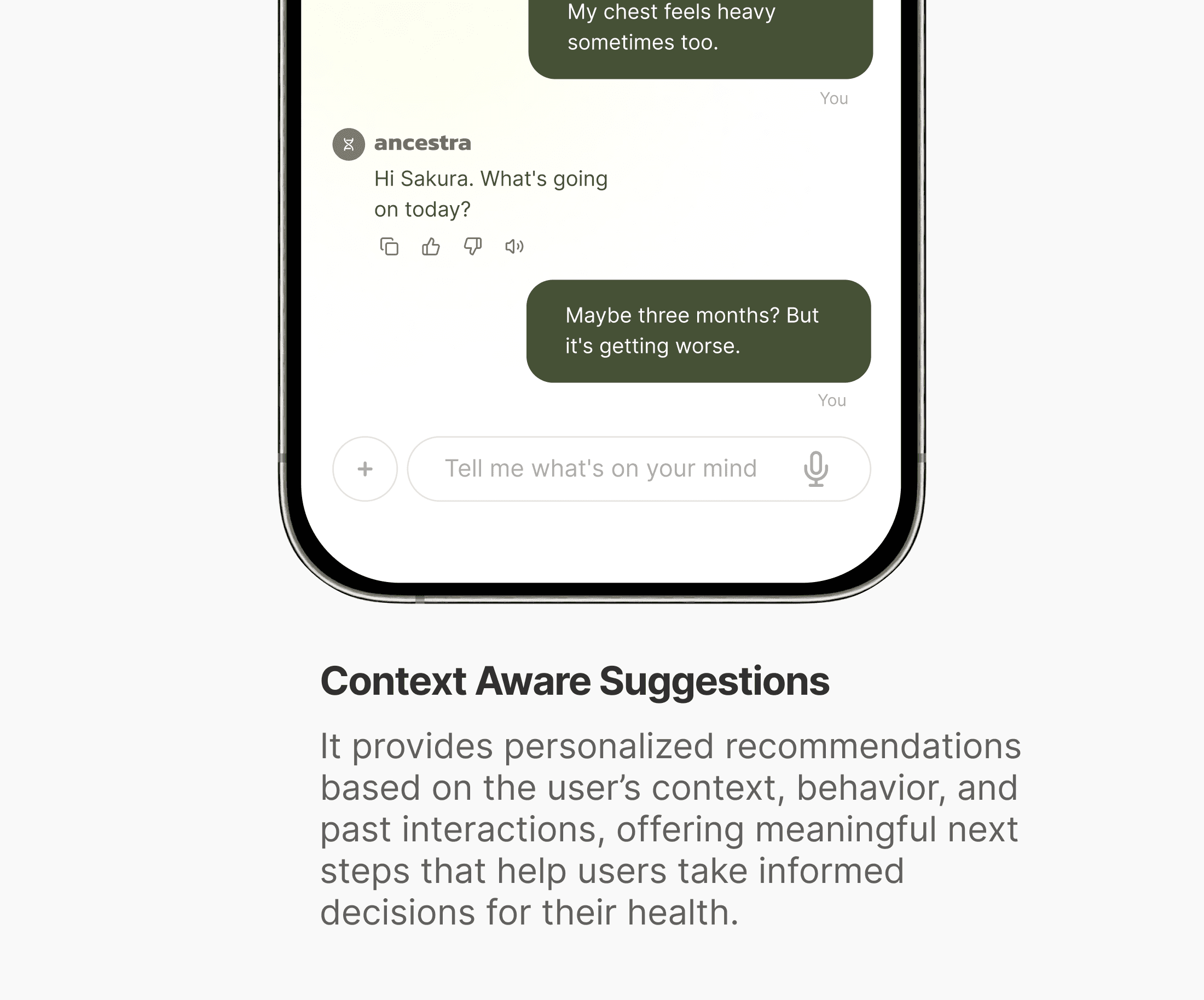
Traditional health AI is reactive; users ask questions, and AI responds. Ancestra is an intelligent health partner that actively notices patterns, initiates meaningful conversations, and coordinates real healthcare actions.
RETROSPECTIVE
Designing UX for AI isn’t just about making something intelligent, it’s about making it something truly useful and actionable in real situations.
Key learnings and reflections
Early engineering involvement
Bringing engineers into design reviews early—not just at handoff, surfaced technical constraints
Proactive gap filling earns trust and credibility
In sensitive diplomatic contexts, taking extra time for encryption is essential
Stakeholder buy-in requires user evidence
Securing approval for events-within-groups required translating user quotes into business metrics
User Feedback Drives Product Vision
Active listening during research uncovers opportunities beyond the immediate scope
Let's make some magic happen!
© 2026 All right reserved
Created by Vidushi Bissa
