Linkedin · Trust & Credibility Lens
Team
Timeline
8 months
Year
2026
Team
Overview
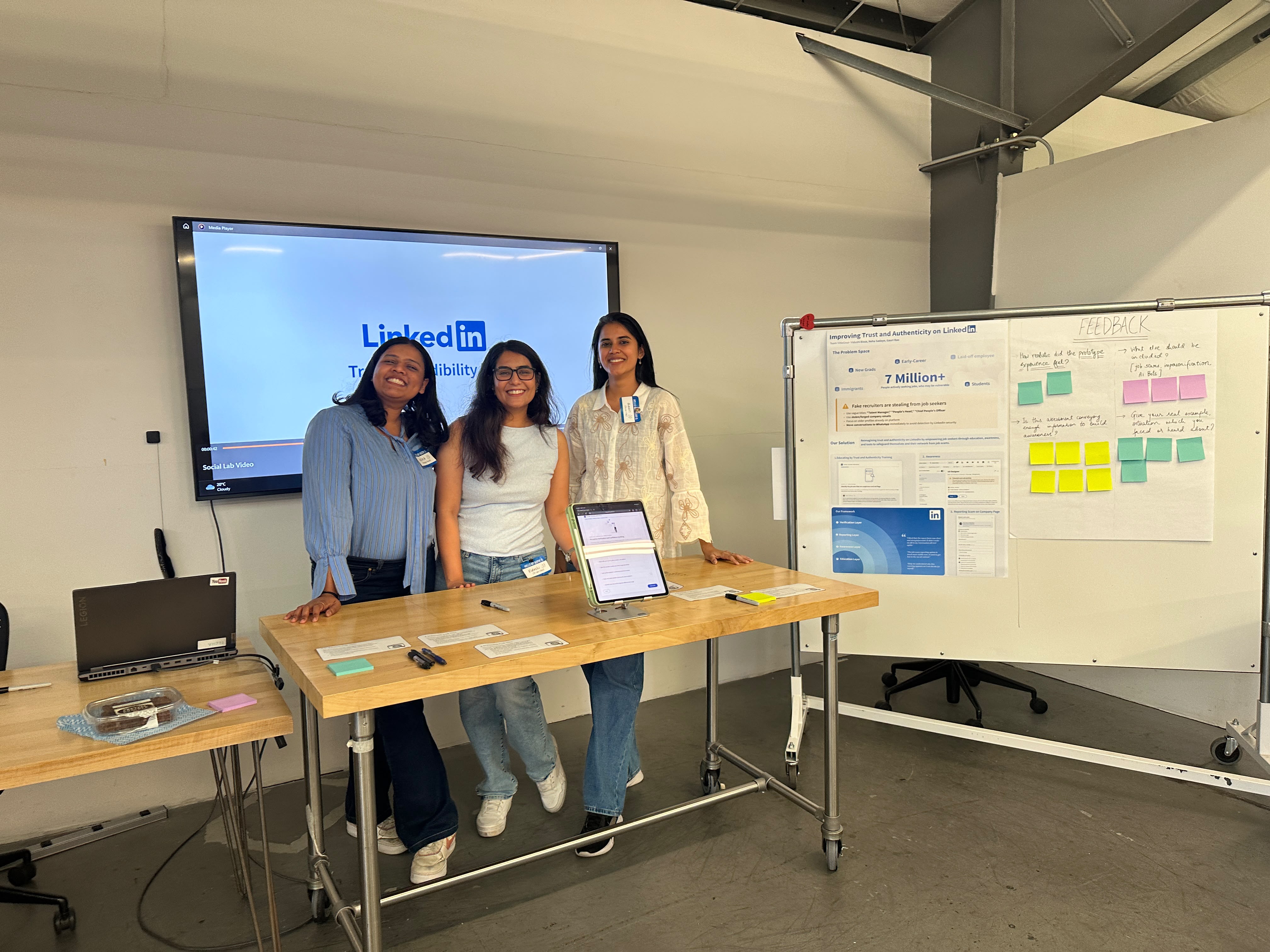
In a world where AI has made fraudulent recruiters and fake postings look identical to real ones, job seekers have to make a trust call in seconds, under the pressure of wanting the opportunity, and the cost of getting it wrong is their money, their data, and their confidence in the platform itself.
We aim to help job seekers recognize, avoid, and report scams before they get harmed and to build lasting confidence in real opportunities instead of becoming suspicious of everything they see.
My Role
Transforming the ambiguous challenge of Responsible Use of Technology into a focused problem around trust and authenticity in LinkedIn's job search experience.
Defined the product strategy by shaping the overall direction of the solution.
Designed and built the end-to-end trust & authenticity training experience.
Impact and Results
Social Impact
Protecting people from risk of being scammed by enhancing psychological safety
Shifting LinkedIn's user behaviour from flagging bad to identifying real
Building confidence in professionals as well as in their own network
90%
of 30 testers had previously encountered LinkedIn scams and said the training helped them recognize scam patterns, not just specific examples.
— Job Seeker

Key Highlights
Solution Highlights
Problem SPACE
Active job seekers on LinkedIn struggle to distinguish real recruiters and job postings from fraudulent ones

Solution
Reimagining trust and authenticity on LinkedIn by empowering job seekers through a 4-layer solution
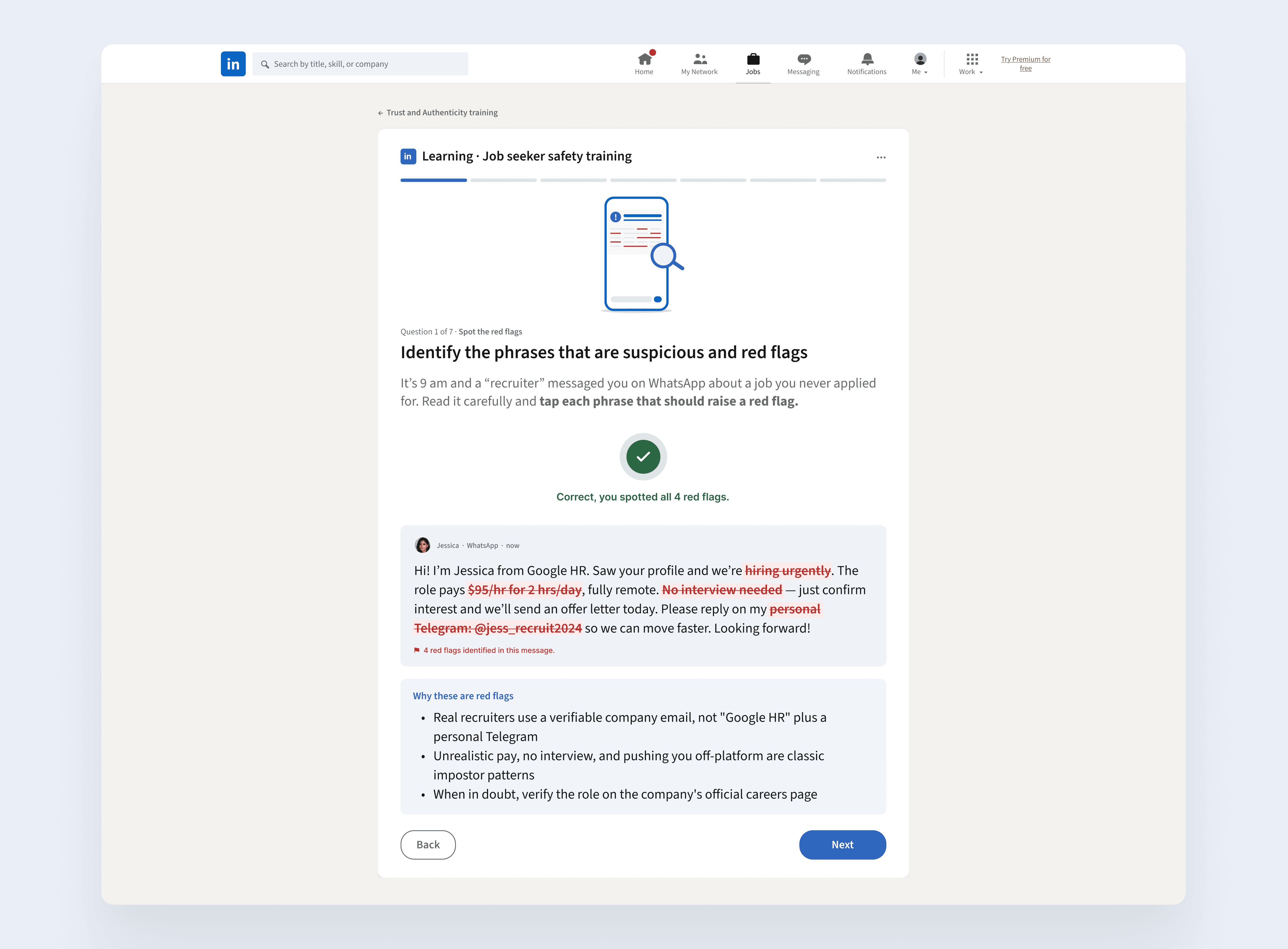
01. Education Layer: Trust & Authenticity Training
Users don't want to rely on a simple "real or fake" label. They want the knowledge to evaluate recruiters, messages, and job postings using clear trust signals and confidence to assess credibility on their own.


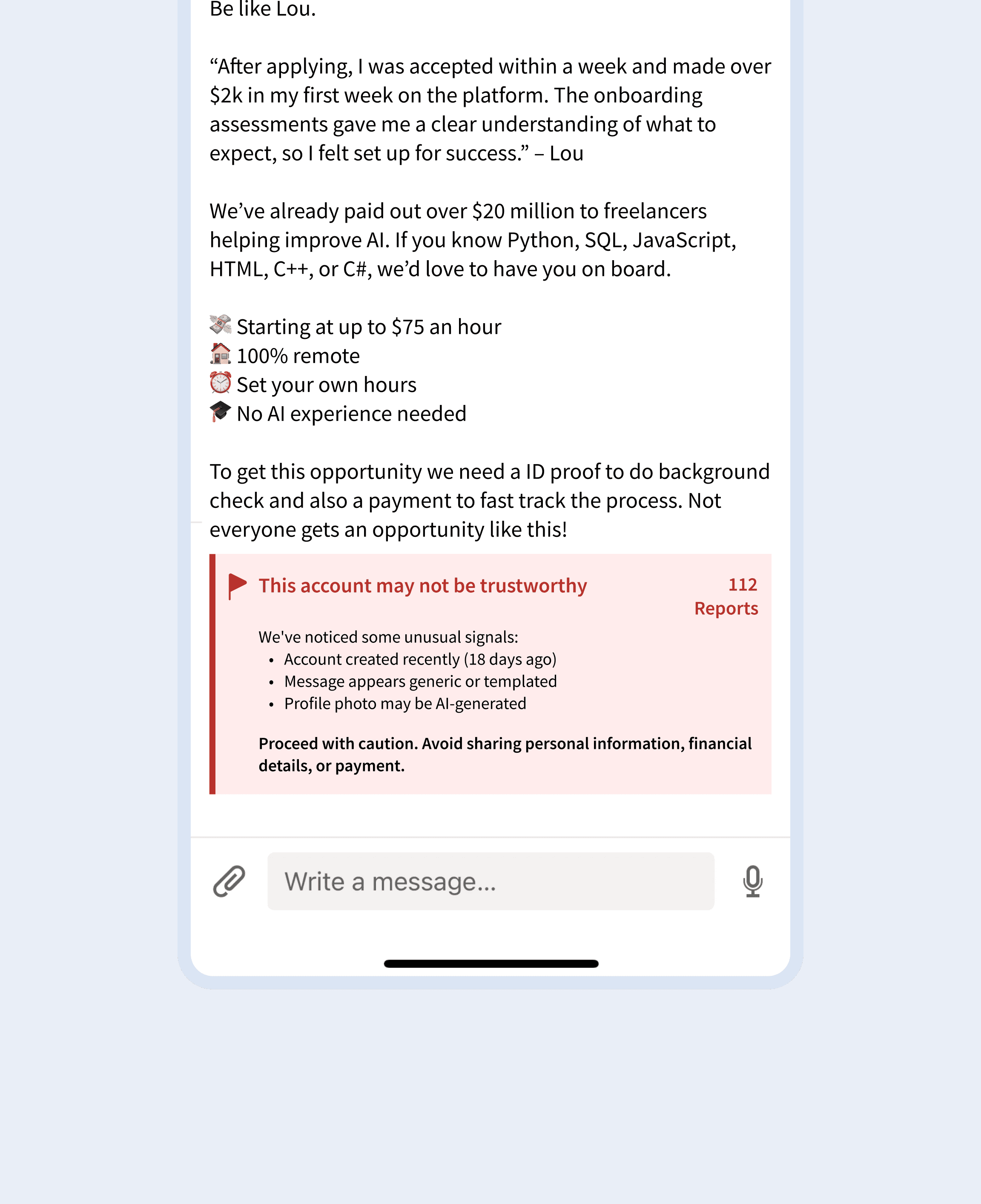
02. Awareness Layer: In-message alerts
Introducing alerts in messages helps users be more aware about the person. Awareness comes from understanding, not just visibility. Users need clear evidence behind trust signals to make informed job search decisions.
03. Report Layer: Company-Specific Reports
Job seekers can report scams easily, companies can protect their reputation, and LinkedIn receives actionable data to identify and remove bad actors.


Reflection
Key Learnings and Reflections
This project taught me how to deal with an ambiguous problem and turn into a solution that helps 1000's of people
Key takeaways
From Ambiguity to Impact
This project began with the broad challenge of Responsible Use of AI. The biggest lesson was learning to narrow an ambiguous problem into a focused opportunity without losing sight of the larger societal impact.
Designing for Confidence
The biggest lesson was that trust isn't built by warning users about everything that could go wrong. Too many warnings create anxiety and make the entire platform feel unsafe.
Content Is the Experience
The wording, sequence of information, and timing of prompts directly influenced users' decisions. Small choices in language shaped how users interpreted trust.
Linkedin ·Trust & Credibility Lens. Thank you for reading.