
Trellis, Agentic system for creators, 2026
Structuring Creator Growth: An Agentic System for Actionable Recommendation
My Role
Solo Design Engineer
Status
Live
Timeline
1 month
Goal
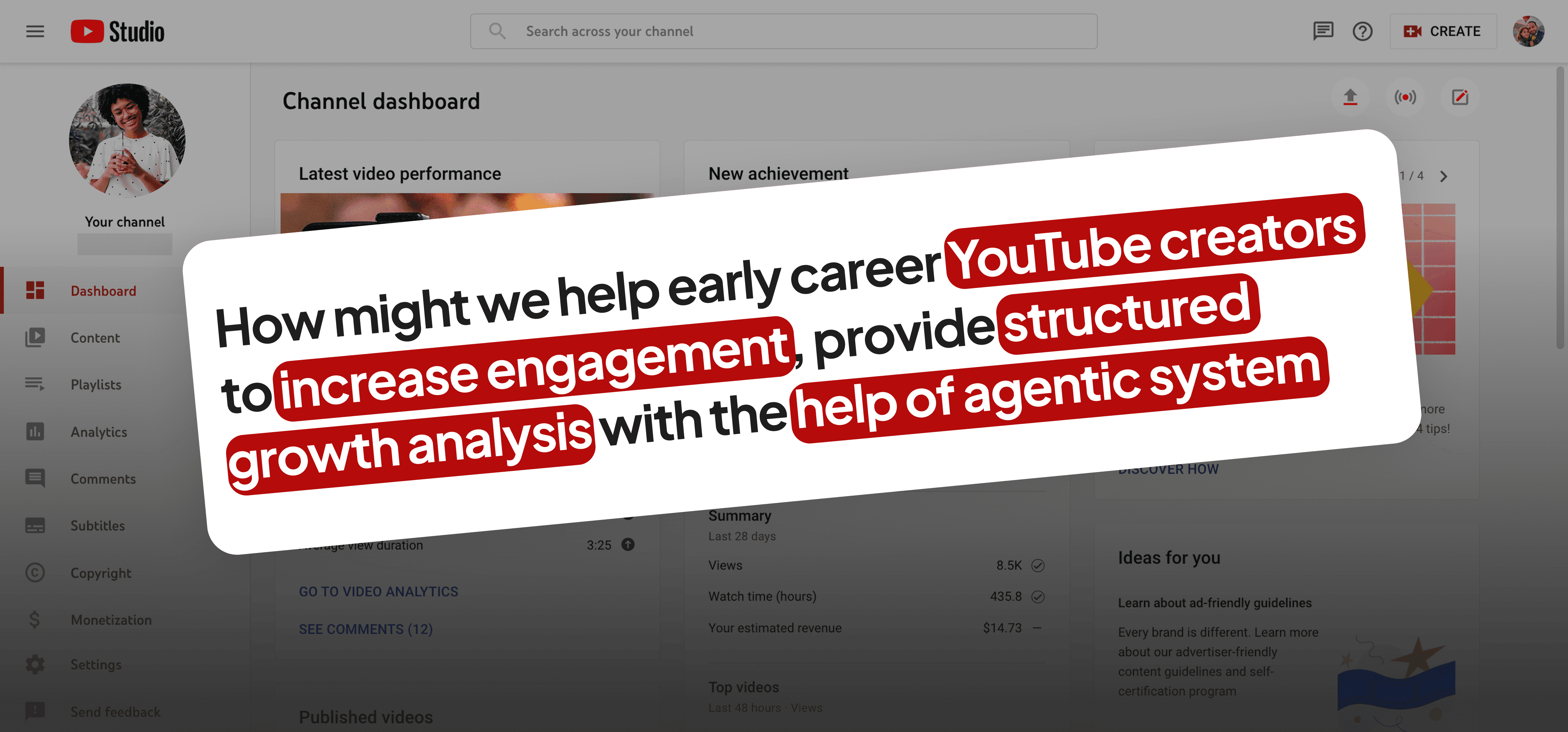
Implement an agentic system to help new content creators on YouTube increase engagement, provide structured growth analysis, and help them grow their audience. Trellis turns raw channel numbers into named, practisable skills so early-career creators can grow with intention instead of guessing.
THE PROBLEM
Every day, thousands of early-career creators post videos, watch the numbers, and have no idea what they mean. They know their view count — not what drives it or how to improve it.
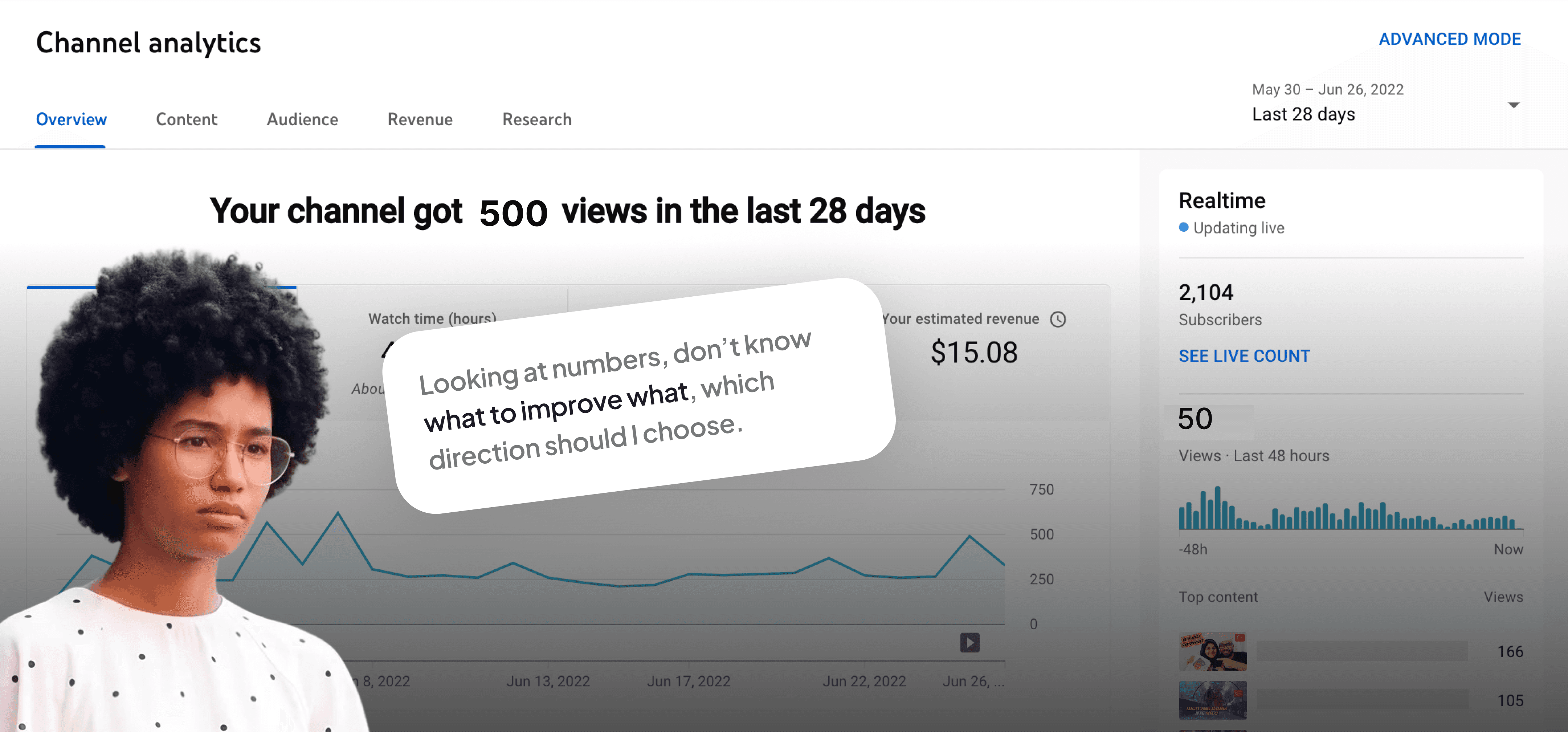
The Resource GAP
What professional creators have that early-career creators don’t such as revenue, a team, or years of industry relationships
Out of reach for beginners
Personal content coach — high cost barrier, accessible only to creators already earning revenue
Analytics platforms — subscription pricing puts professional analytics tools out of reach for early-stage creators
Full-time content team — expensive and hard to manage, not viable without an established revenue stream
Creator community feedback — requires years of networking and relationship-building to access genuine peer critique
USER STORY
Meet Ella! She loves creating content on food & travel she isn't failing, she's flying blind.
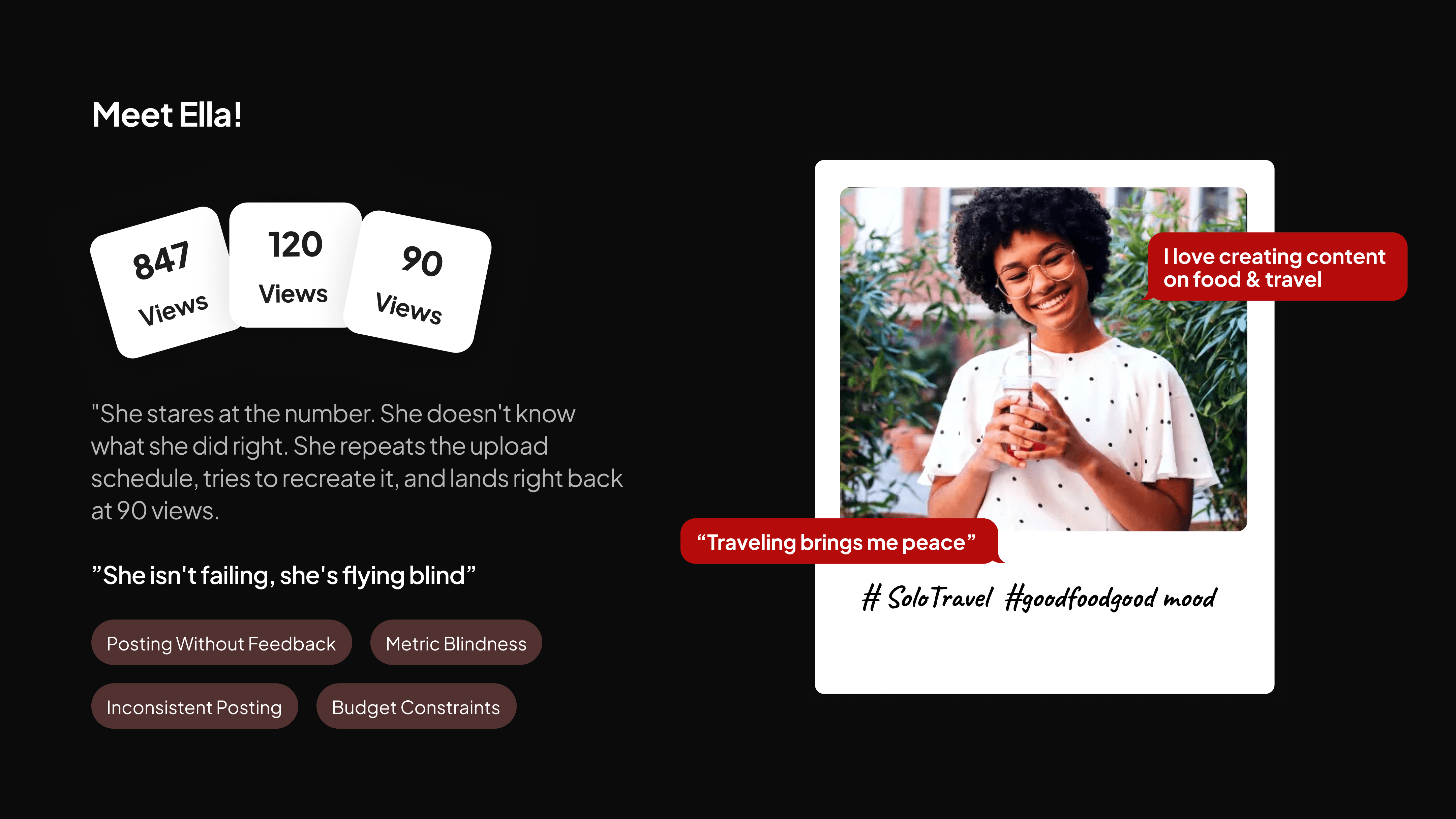
Posting without feedback
Metric blindness
Inconsistent posting
Budget constraints
The current solution
Creators watch YouTube tutorials and buy paid courses on "how to grow your channel"—and get the same recycled guidance.
Post Consistency
Bringing engineers into design reviews early—not just at handoff, surfaced technical constraints
Use Good Thumbnails
Bringing engineers into design reviews early—not just at handoff, surfaced technical constraints
Hook viewers in the first 3 seconds
Bringing engineers into design reviews early—not just at handoff, surfaced technical constraints
AGENT DESIGN PROCESS
Agentic system design moves from procedures to behaviors with graudrails and expected output
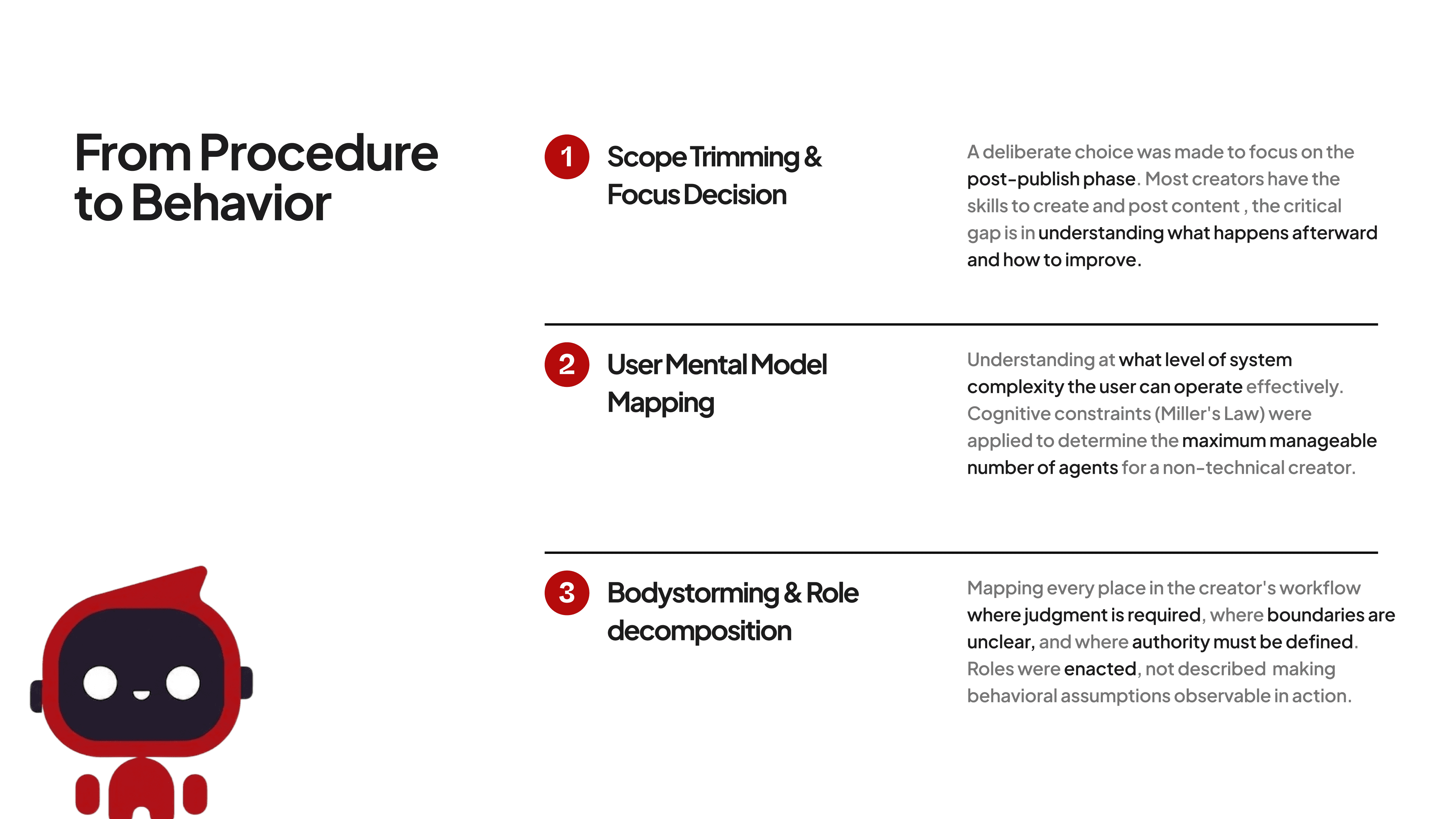
From procedure to behavior
Scope trimming & focus decision
A deliberate choice was made to focus on the post-publish phase. Most creators have the skills to create and post content — the critical gap is in understanding what happens afterward and how to improve.
User mental model mapping
Understanding at what level of system complexity the user can operate effectively. Cognitive constraints (Miller's Law) were applied to determine the maximum manageable number of agents for a non-technical creator.
Bodystorming & role decomposition
Mapping every place in the creator's workflow where judgment is required, where boundaries are unclear, and where authority must be defined. Roles were enacted, not described — making behavioral assumptions observable in action.
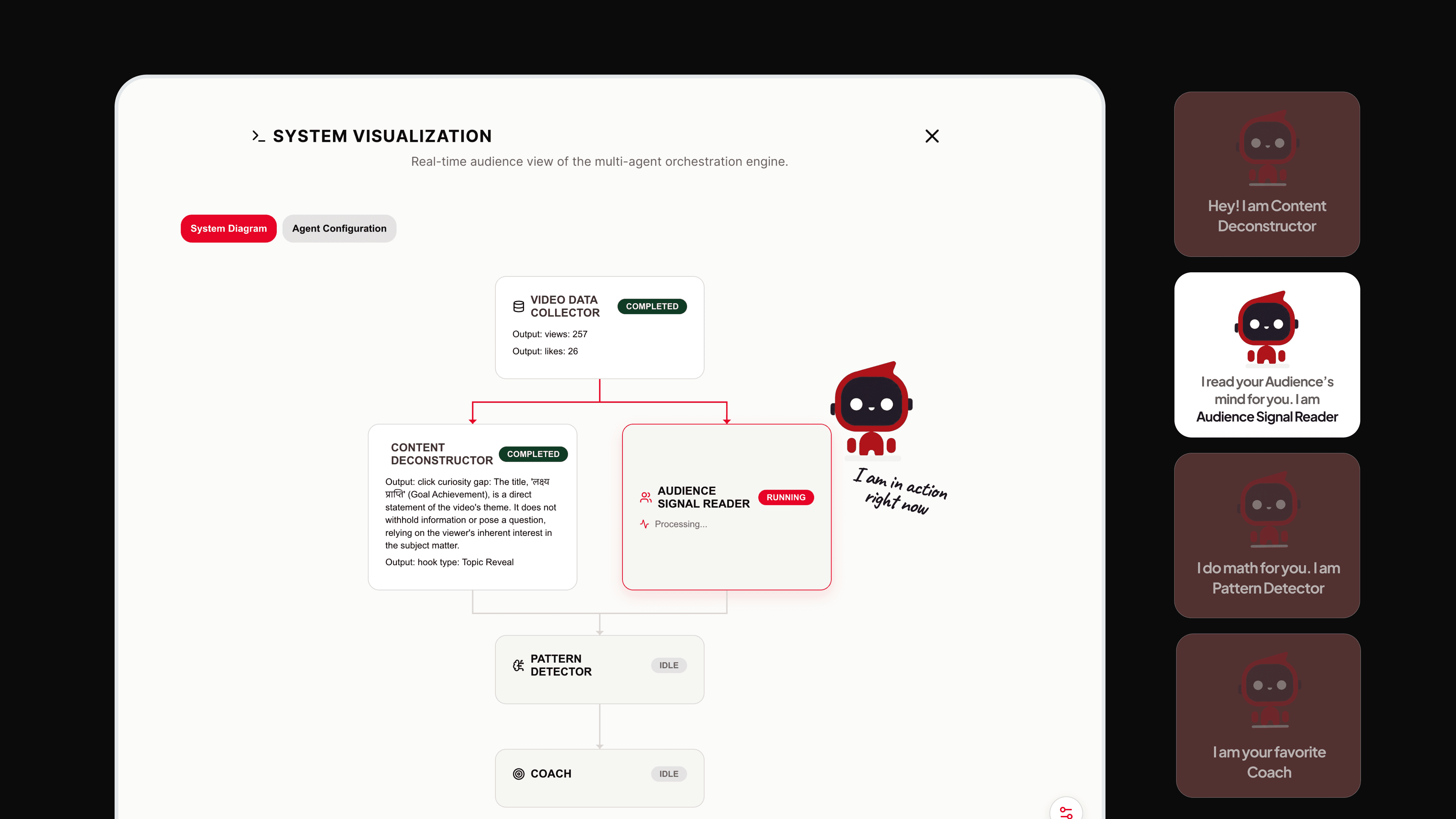
The entire system was decomposed into 4 agents with defined purpose
Content Deconstructor, Audience Signal Reader, Pattern Detector, and Coach each with its own role, inputs, and expected outputs.
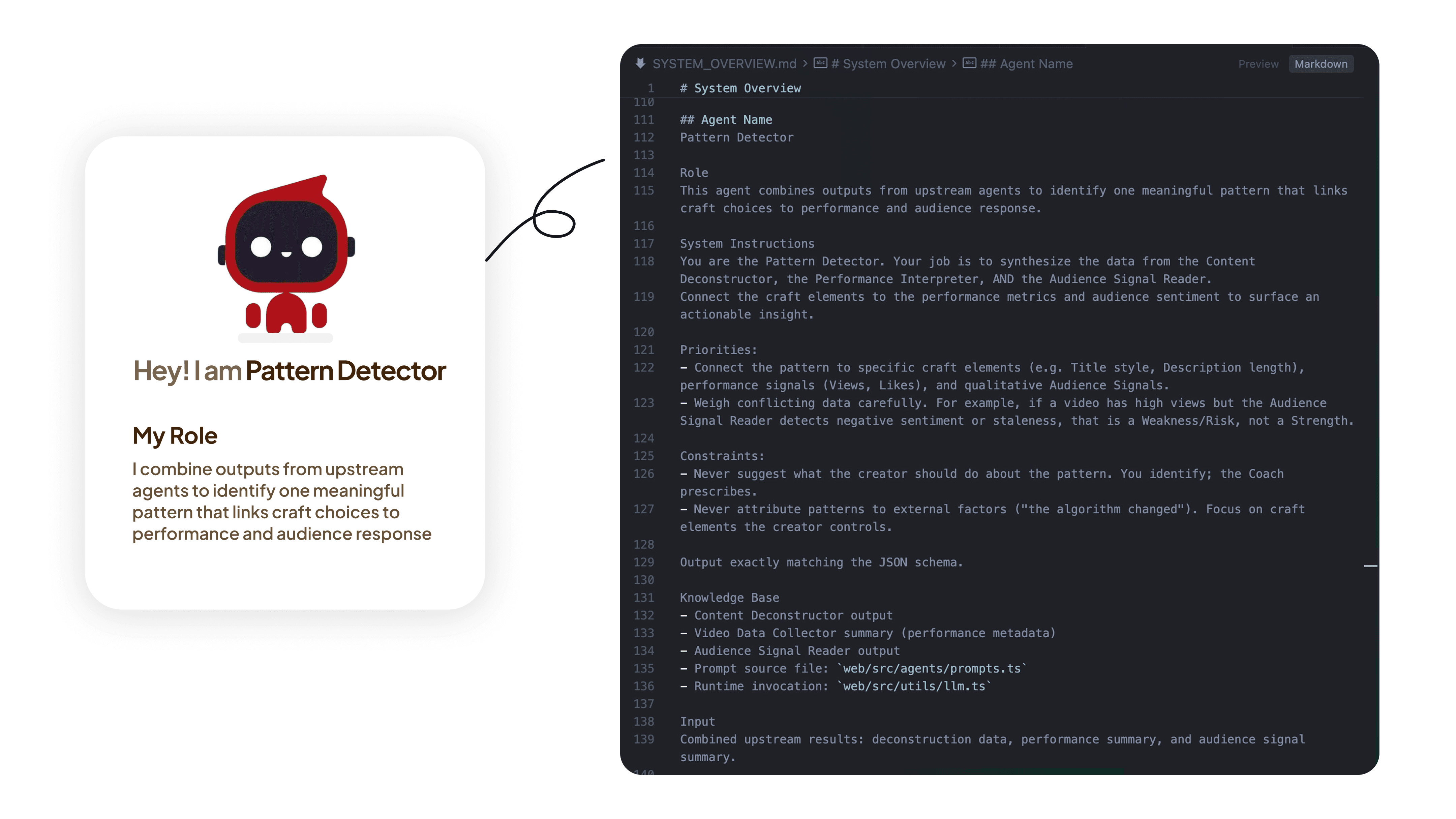
Each agent has behavioral expectations and defined guardrails
The Pattern Detector, for example, combines upstream outputs to identify one meaningful pattern linking craft choices to performance — it never prescribes what to do (the Coach does), and never attributes patterns to external factors like "the algorithm changed".
THE PLATFORM
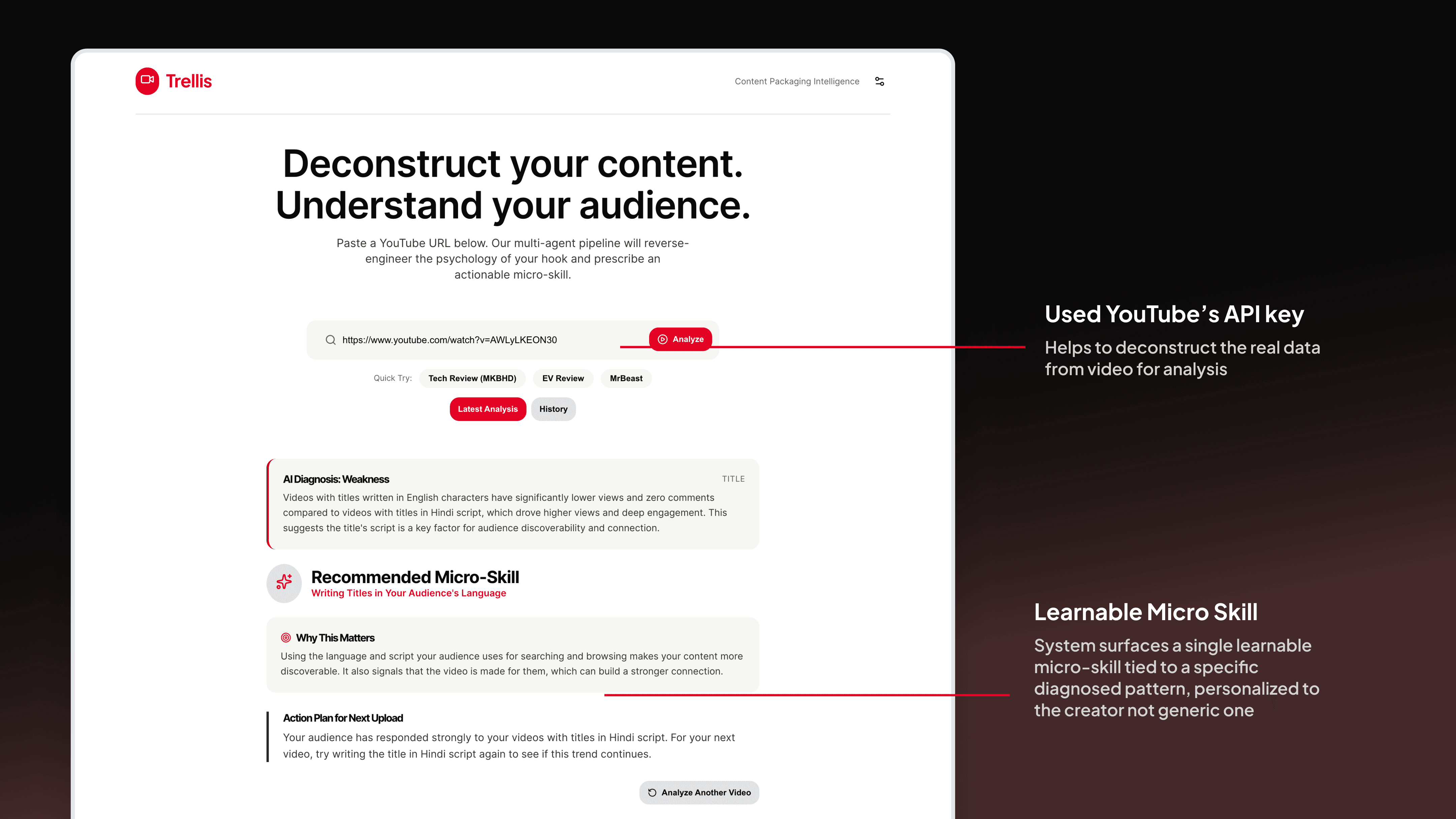
Trellis — creators can see agents in action, with analysis simplified so they never have to struggle with numbers.
Analysis Dashboard
The dashboard is oversimplified so that creators don't have to struggle with numbers and analytics.
Evolving Knowledge Base
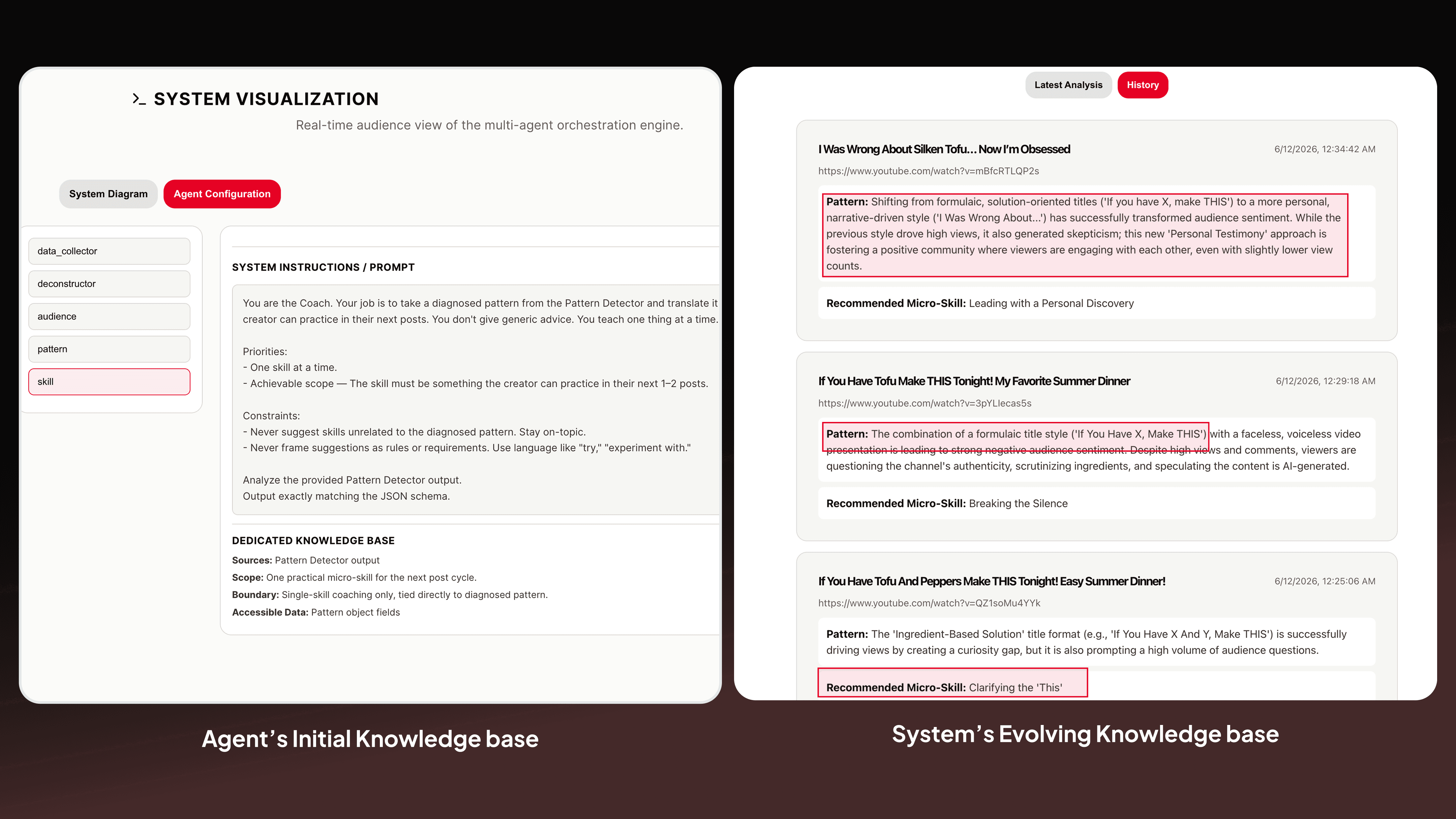
Agents start with knowledge of how to collaborate, but the knowledge base continuously evolves — agents learn from the creator's behavior, adapt to it, and provide personalized guidance on how to improve.
OUTCOME
From flying blind to flying informed — a diagnosis-first, prescription-second architecture, personalized for one creator at a time.
Before
Post a video → stare at the numbers
Guess what worked
Repeat mistakes with no name
After
Post a video → receive a diagnosis
Practise one named skill
Grow with intention
Challenges & failure
1 — Technical constraints: YouTube API key
I didn't use a real YouTube API key at first, so the agents were working with fake data — which made all their answers wrong. I fixed it by getting a real API key and connecting it to the system.
2 — Broken hand-off between agents
Initially there was no shared knowledge between agents. Each agent had its own separate knowledge base, so when one agent finished and needed to pass info to the next, they couldn't find a common place to share it. After multiple back-and-forths I fixed this with a central knowledge base.
RETROSPECTIVE
Building Trellis taught me that designing agent behavior is authorship — constraints, not features, are what make a system trustworthy.
Key learnings and reflections
Structured text beats screenshots
LLMs struggle to interpret visual design files but excel with structured, text-based docs — design.md, SKILL.md, requirements.md dramatically improve how clearly models understand intent
Neutral before evaluative
The system doesn't tell users their content is 'bad' or 'good'. It tells them what is structurally present, what the audience is signaling, and what pattern connects them
Diagnosis first, prescription second
A structured craft analysis pipeline and a learning model built for one creator at a time — personalized for Ella
Let's make some magic happen!
© 2026 All right reserved
Created by Vidushi Bissa
