Trellis · Growth Analysis Agentic System for Creators

Timeline
April 2026 - Current
Year
2026
Team
Solo Design Engineer
Overview
Implement an agentic system to help new content creators on YouTube increase engagement, provide structured growth analysis, and help them grow their audience. Trellis turns raw channel numbers into named, practisable skills so early-career creators can grow with intention instead of struggling with metrics and data.
My Role
Conducted user research and established system architecture.
Scoped the system to post-publish, set the agent count using cognitive limits, and decomposed it into four agents through bodystorming. Wrote agent roles, inputs, and guardrails.
Acted as solo designer and developed the system using Figma MCP and Claude Code.
Impact and Results
15 Analysis
Analyses run on real videos, not demos
30–40s
End-to-end time for a full four-agent analysis
30+ Industry Experts
Industry professionals reviewed it at exhibit
5 creators onboarded with 15 real analysis


— Paras Doshi, Data Scientist Amazon and Creator

Presented to Designers from YouTube
Key Highlights


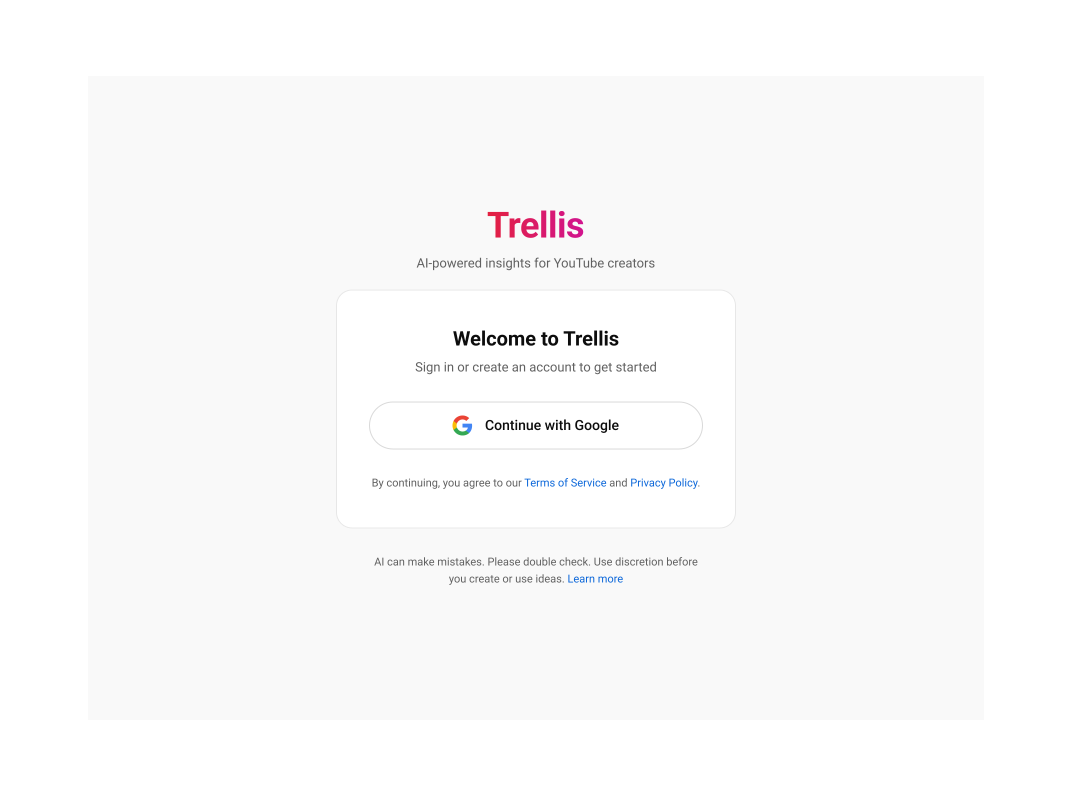
Guided Onboarding Highlights
Problem SPACE
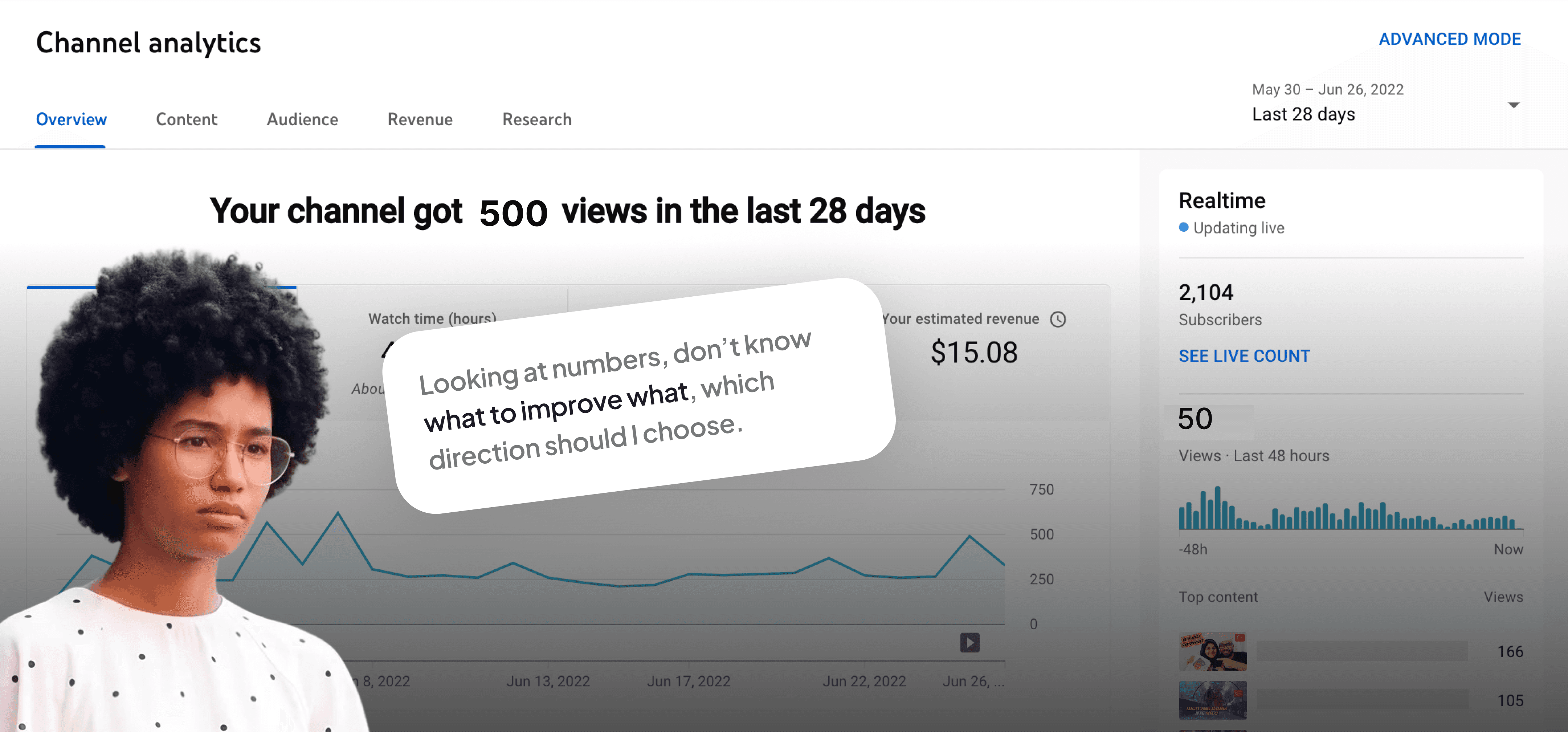
Early-career creators post videos, watch the numbers, and have no idea what they mean.
Solution
Trellis - An agentic system that reads a creator's video, reads their audience, and help them learn one skill at a time. No graphs. No charts. No metrics.
Natural-language analysis and one micro-skill
Trellis returns a written diagnosis of the video and one recommended micro-skill, split into why this matters and an action plan for the next upload. No graphs. No charts. No performance score.


Leading with transparency
A live view of the four agents working. The creator can watch the analysis happen, open each agent, and see its role, its input, and its output in readable text.
Trellis is not a black box. It shows how it works and why it reached a conclusion.
Personalizing growth through system memory
Trellis is not one-solution-fits-all. Two creators can post the same kind of video and need completely different skills, because the gap is in them, not in the format. Without memory, every analysis starts from zero and the advice stays generic.

Central knowledge base
Shared craft knowledge. Each agent has its own dedicated section inside it, scoped to that agent's job.

Evolving knowledge base
Per-creator memory. Built from the first few analyses, posting habits, content type, language, tone, personality.
Testing
System Evaluation
Agentic System Testing
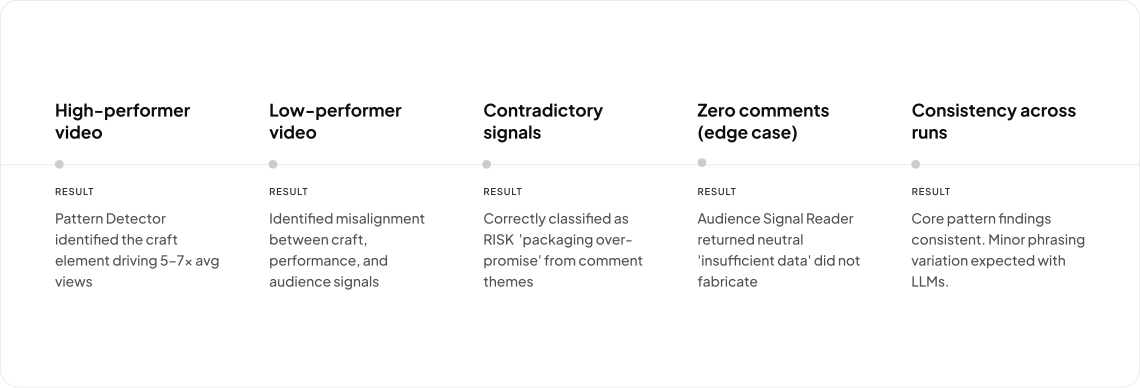
Each eval targets a specific design decision, not a feature, not a metric, but a behavioral constraint that was explicitly authored.
Reflection
Key Learnings and Reflections
This project taught me how to deal with an ambiguous problem and turn into a solution that helps 1000's of people
Key takeaways
Language is accessibility
Complex technical language can make people feel like a product is not meant for them. Using simple, clear language made the experience easier to understand and more accessible.
Principles Guide the System
An agentic system can become complex quickly, so having clear principles is important. These principles helped me stay focused and guided the decisions I made throughout the design process.
Test the Edge Cases
Testing different scenarios and edge cases is crucial. These tests help uncover gaps, improve how the agents handle unexpected situations, and make the overall system more robust and reliable.
What's NEXT for Trellis
Onboarding flow and guided tour of the system
Mark a micro-skill as done as a feature for users to keep track of what they learned
Conversational analysis, where creators can directly ask clarifying questions
Trellis · Growth Analysis Agentic System for Creators. Thank you for reading.